
Pontoon and Jetty Permit in Queensland Australia: 2026 Guide
 12 min read
2,393 words
12 min read
2,393 words
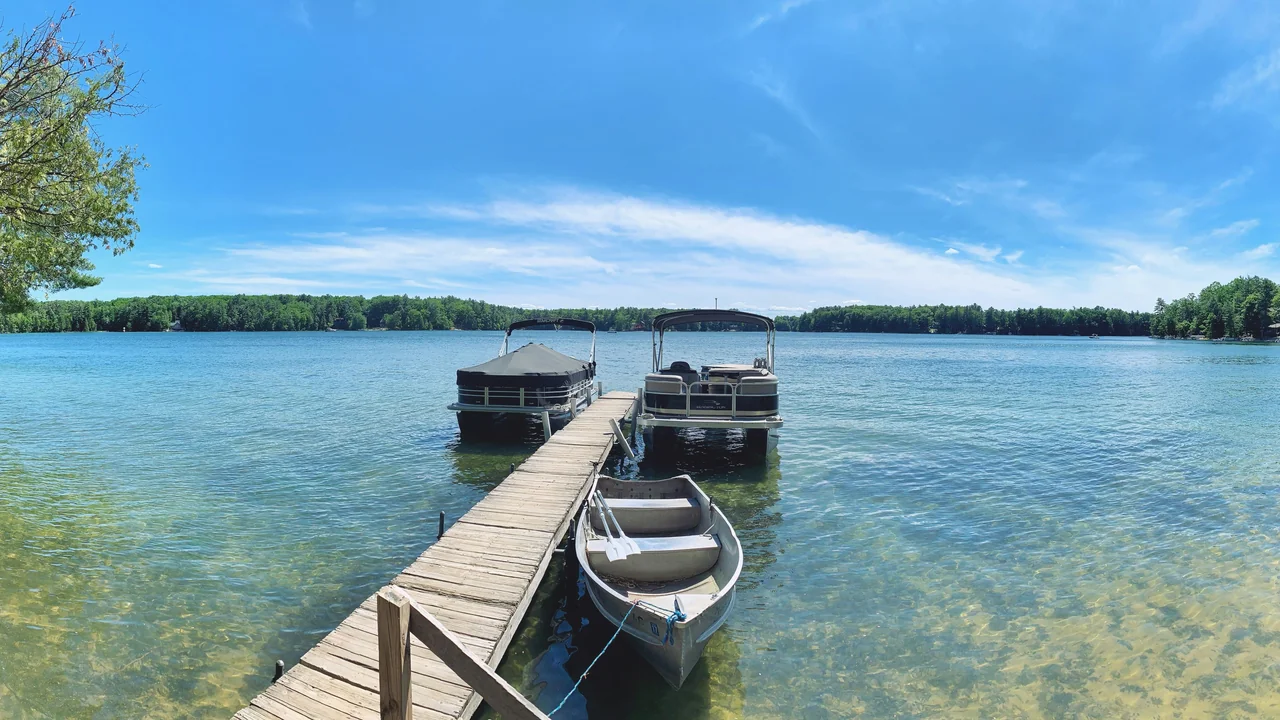
If you are a waterfront property owner in Queensland and are planning to install a pontoon or jetty, you almost certainly need a permit. The requirement for a pontoon permit Queensland is governed by a complex web of state and local regulations, and failing to secure the correct approvals can result in significant fines and orders to remove your structure. This guide will walk you through the specific agencies you need to contact, the development approval process, the critical distinction between tidal and non-tidal waters, and the costs and timelines you can expect for your marine development permit Queensland application in 2026.
Which Agency Issues a Pontoon Permit in Queensland?
Unlike some US states where a single state agency handles all waterfront permits, Queensland requires approvals from multiple bodies. For a pontoon permit Queensland, you will typically need to engage with at least two, and sometimes three, separate government entities. The primary agencies are the Queensland Department of Resources (for tidal works), your local council (for development approval), and Maritime Safety Queensland (MSQ) for navigational safety assessments.
Queensland Department of Resources (Tidal Works)
If your proposed pontoon or jetty is located in tidal waters (which covers most coastal and estuarine areas), the Department of Resources is your first stop. They administer the Coastal Protection and Management Act 1995 and require a tidal works approval. This permit assesses the impact of your structure on coastal processes, public access along the foreshore, and the surrounding marine environment. The department will evaluate whether your pontoon causes undue erosion or interferes with the natural flow of water.
Local Council (Planning and Development Approval)
Your local council, such as the Gold Coast City Council or Sunshine Coast Regional Council, handles the planning and development approval aspect. Even if the Department of Resources approves the tidal works, your council may have its own overlay codes and planning schemes that affect where and how you can build. This is especially true in areas like Moreton Bay, where local planning schemes include specific provisions for marine structures within canal estates and coastal residential zones. You must check if your property is subject to a local law requiring a development permit for a pontoon.
Maritime Safety Queensland (Navigational Safety)
Maritime Safety Queensland (MSQ) is the third agency you may need to deal with, particularly for larger structures or those in busy waterways. MSQ assesses your application to ensure the pontoon or jetty does not create a navigational hazard. They will consider vessel traffic patterns, visibility around bends, and the width of the channel. If your structure is likely to protrude into a navigable waterway, MSQ will impose conditions or require you to install navigational markers (such as lights or reflectors) at your own cost.
What Is the Development Approval Process for a Jetty Permit QLD?

The process for obtaining a jetty permit QLD is a staged one, and it is crucial to understand that you cannot simply “build and ask later.” The path from initial concept to final approval can take several months and requires a methodical approach. The process generally involves a pre-lodgement meeting, formal application, public notification in some cases, and finally, the approval with conditions.
Contact your local council and the Department of Resources to discuss your proposal. This free step can identify fatal flaws early, such as proximity to a marine park boundary or a protected seagrass meadow.
You will need a site plan, a detailed design of the pontoon or jetty, a geotechnical report (if piles are involved), and an environmental assessment. For tidal areas, a coastal management report is often mandatory.
Lodge your application with your local council. If tidal works are involved, you will need to submit a separate application to the Department of Resources. Some councils have a combined process, but this is rare.
For larger jetties or those that impact public access, your application may need to be publicly notified. Neighbors and the public can make submissions, which the assessing officer must consider.
Once approved, you will receive a development permit with specific conditions, such as maximum pontoon size, lighting requirements, and construction timeframes. You must comply with these exactly.
Tidal vs Non-Tidal Waters: A Key Distinction for Your Dock Permit Australia
In Australia, the regulatory framework for a dock permit Australia hinges dramatically on whether your water is tidal or non-tidal. This is the single most important factor in determining which agency leads the process and what rules apply. Confusing the two can lead to submitting your application to the wrong authority, causing months of delays.
Tidal Waters (Coastal and Estuarine)
Tidal waters are those subject to the ebb and flow of the tide. This includes the open coast, bays like Moreton Bay, and estuaries and rivers up to the tidal limit. For these areas, the Department of Resources is the lead agency under the Coastal Act. You will need a tidal works approval, which is a specific type of marine development permit Queensland. The assessment focuses heavily on coastal processes, public access along the foreshore, and impacts on marine plants like mangroves and seagrass. The presumption in tidal waters is that private pontoons are not automatically allowed; they must be proven to have minimal public impact.
Non-Tidal Waters (Freshwater Lakes and Dams)
Non-tidal waters, such as freshwater lakes, weirs, and impoundments, are regulated differently. The Department of Resources is not the lead agency for the structure itself (unless it affects waterway barrier works). Instead, your local council typically has full authority under the Planning Act 2016. The assessment criteria shift from coastal management to water quality, drainage, and flood immunity. For example, a pontoon on a freshwater dam on the Sunshine Coast hinterland would be assessed primarily by the council’s planning department, not the coastal team. The requirements are often less onerous than for tidal waters, but you still need a development permit.
State Marine Park Restrictions and Environmental Conditions
Queensland has an extensive network of state marine parks, particularly around the Great Barrier Reef, Moreton Bay, and the Great Sandy Marine Park. If your property borders a marine park, your pontoon permit Queensland application will face additional scrutiny. Marine parks are zoned, and activities are regulated by the Queensland Parks and Wildlife Service (QPWS).
Moreton Bay Marine Park
This is one of the most heavily regulated areas for waterfront development. The Moreton Bay Marine Park has “green zones” (no-take areas) and “yellow zones” (habitat protection). Building a pontoon or jetty in a green zone is generally prohibited. Even in yellow zones, you must demonstrate that your structure will not harm seagrass beds, which are critical for dugong and turtle habitat. QPWS will likely require an ecological assessment as part of your marine development permit Queensland application. The approval process here can take 6-12 months due to the environmental sensitivity.
Great Sandy Marine Park (Sunshine Coast and Fraser Coast)
Similar to Moreton Bay, the Great Sandy Marine Park covers the waters from Bribie Island to Bundaberg. This park has specific provisions for “existing lawful use,” meaning if your property already has an approval for a jetty, you may be able to replace it, but new structures face a high bar. The park’s management plan includes strict limits on pontoon size (often a maximum of 30 square meters) and requires that structures be designed to allow light penetration to the seabed to support seagrass growth.
How Much Does a Pontoon Permit Queensland Cost?
The cost of a pontoon permit Queensland is not a single fee but a combination of application charges from multiple agencies, plus the cost of professional reports. You should budget for both the government fees and the consultant fees for surveys and designs. The table below provides a realistic breakdown based on 2025-2026 fee schedules.
| Fee Component | Estimated Cost (AUD) | Notes |
|---|---|---|
| Department of Resources (Tidal Works Application) | $800 – $2,500 | Varies based on structure size and complexity. |
| Local Council Development Application | $1,200 – $4,000 | Depends on the council and the assessed value of the works. |
| Maritime Safety Queensland (Navigational Assessment) | $300 – $1,000 | Only required for structures in navigable waters. |
| Environmental Assessment Report | $2,000 – $6,000 | Required for marine park areas or sensitive habitats. |
| Survey and Design (by a Registered Professional Engineer) | $3,000 – $8,000 | Includes site survey, structural design, and certification. |
| Total Estimated Cost | $7,300 – $21,500 | This does not include construction costs. |
Size Limits and Conditions for a Jetty Permit QLD
Queensland does not have a single statewide size limit for pontoons and jetties. Instead, limits are determined by your local council’s planning scheme and, for tidal areas, by the Department of Resources’ coastal management policies. However, there are common patterns that apply across most of the state, particularly in popular areas like the Gold Coast and Sunshine Coast.
Maximum Pontoon Size
In most residential canal estates on the Gold Coast, the maximum allowable pontoon size is typically between 20 and 30 square meters. On the Sunshine Coast, the limit is often stricter, around 15 to 25 square meters. The council will also limit the width of the walkway (jetty) connecting the pontoon to the shore, usually to 1.2 to 1.5 meters. These limits are designed to minimize visual impact and maintain public access along the waterway.
Setback Requirements
Your pontoon or jetty must be set back from property boundaries and from any public infrastructure. A common condition is that the structure must not extend beyond the “alignment” of neighboring structures. This means you cannot build your jetty further out into the waterway than your neighbor’s, unless you can prove a specific need. Additionally, you must maintain a clear corridor for pedestrian access along the foreshore (often a 2-meter wide path) if your property is on a public waterway.
Environmental Conditions
Every jetty permit QLD will include conditions to protect the marine environment. Common conditions include: using non-toxic, marine-grade materials that do not leach chemicals; prohibiting the use of treated pine in direct contact with water in some sensitive areas; requiring the structure to be designed to allow light penetration; and a condition that no dredging is permitted. You may also be required to install a sediment control barrier during construction to prevent runoff into the water.
Summary and Action Plan for Your Pontoon Permit Queensland
Obtaining a pontoon permit Queensland is a multi-agency process that requires careful planning and patience. The complexity is driven by the need to balance private waterfront access with public rights and environmental protection. Your first action should be to determine whether your waterway is tidal or non-tidal, as this dictates the lead agency. If tidal, contact the Department of Resources for a pre-application meeting. If non-tidal, start with your local council’s planning department. For a comprehensive overview of the general principles that apply across Australia, including the role of the Commonwealth government in some cases, refer to our Boat Dock Permit Guide. Do not proceed with any construction until you have written approvals from all relevant agencies, as enforcement actions in Queensland are strict and can include removal orders at your expense.
Frequently Asked Questions
Do I need a permit for a pontoon in Queensland?
Yes, in almost all cases you need a permit for a pontoon in Queensland. If your pontoon is in tidal waters, you need a tidal works approval from the Department of Resources. If it is in non-tidal waters, you need a development permit from your local council. Additionally, if your property is within a state marine park, you will need approval from the Queensland Parks and Wildlife Service. Building without these permits can result in fines of up to $200,000 and a court order to remove the structure.
What is marine development approval in QLD?
Marine development approval in Queensland refers to the combined process of securing a development permit under the Planning Act 2016 and any necessary tidal works approval under the Coastal Protection and Management Act 1995. For a pontoon or jetty, this approval assesses the impact on coastal processes, navigation, public access, and the marine environment. The approval will include specific conditions about the size, location, and materials of your structure, and it is valid for a set period, often 10 years, after which you may need to renew it.
How much does a jetty permit cost in Queensland?
The total cost for a jetty permit in Queensland typically ranges from $7,300 to $21,500, not including construction. This includes government application fees (around $800 to $2,500 for the Department of Resources and $1,200 to $4,000 for your local council), plus the cost of professional reports such as an environmental assessment ($2,000 to $6,000) and engineering designs ($3,000 to $8,000). The wide range reflects the variability in site complexity, with marine park locations costing significantly more due to the need for detailed ecological surveys.
Last updated: July 02, 2026
- Queensland Department of Resources – Coastal Management
- Maritime Safety Queensland – Marine Infrastructure
- Planning Act 2016 (QLD) and Coastal Protection and Management Act 1995 (QLD)

Dock Permit Guide
DockPermitGuide editor covering boat dock and pier permit requirements, costs, and regulations across the United States, Canada & Australia.
2 Comments