
Dock Construction Noise and Vibration Rules: Timing Windows & Limits (2026)
 13 min read
2,597 words
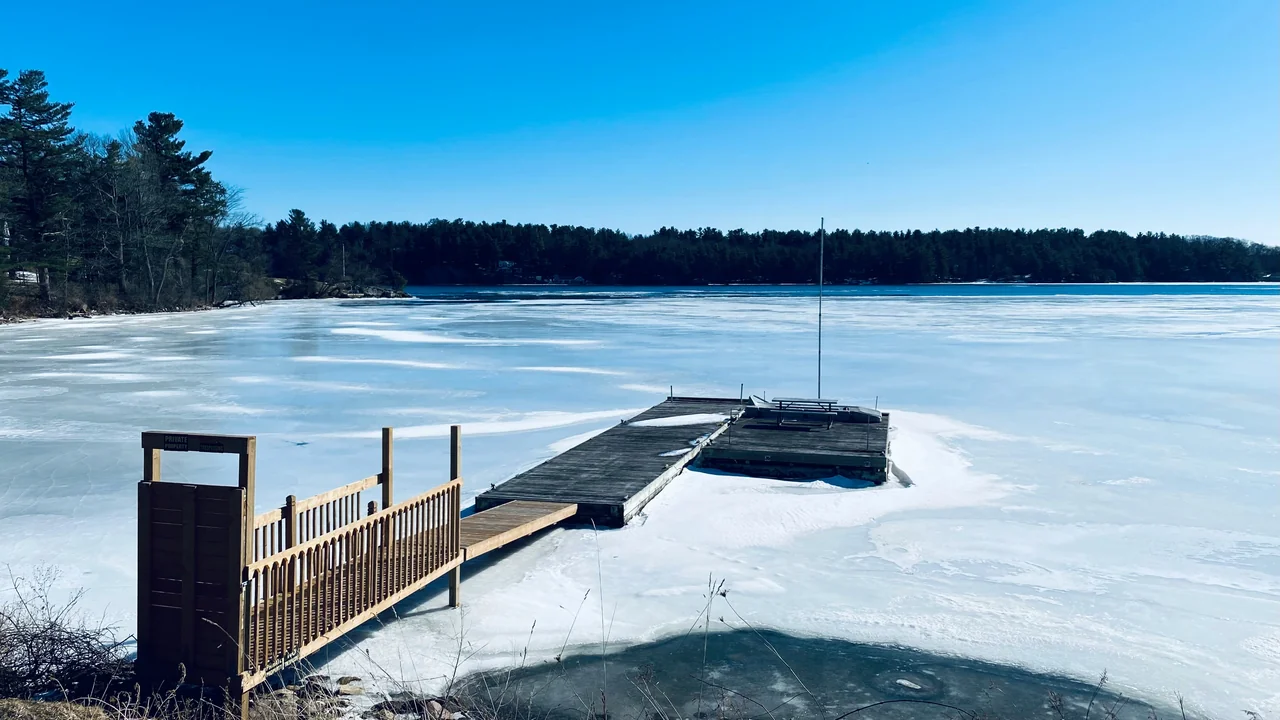
If you are planning a dock construction project, understanding dock noise regulations is just as critical as knowing the permit fees. Noise and vibration from pile driving, sawing, and heavy equipment can disturb neighbors, protected wildlife, and violate local ordinances. This guide covers the specific timing windows, decibel limits, and vibration monitoring requirements you need to follow in 2026 to keep your project on schedule and out of legal trouble.
You will learn exactly which agencies set the rules, how fish spawning seasons dictate your construction calendar, and what noise limits apply to pile driving. We break down the in-water work windows by region, local noise ordinances for waterfront construction, and the best months to build based on your location. Whether you are a contractor or a homeowner, this is your practical, calendar-focused roadmap for compliant dock construction.
Which Agencies Set Dock Construction Noise Rules?
No single agency governs all dock noise rules. Three layers of authority typically apply to your project, and you must satisfy each one.
| Agency Level | Primary Concern | Typical Regulation |
|---|---|---|
| Federal (USACE) | Marine mammal and fish protection | Pile driving noise limits, in-water work windows |
| State (DNR/DEQ) | Water quality, endangered species | Construction timing windows, vibration thresholds |
| Local (County/City) | Neighborhood noise, public safety | Dock construction hours, decibel limits, weekend bans |
The US Army Corps of Engineers (USACE) regulates noise primarily through its Section 404 permit process. For pile driving, they require noise attenuation measures if your project could impact threatened or endangered species. State agencies like the Department of Natural Resources (DNR) or Department of Environmental Quality (DEQ) add their own timing restrictions based on local fish spawning and bird nesting seasons. Local county or municipal codes then layer on top of these rules with specific dock construction hours and decibel limits.
Pile Driving Noise Restrictions: Marine Mammal Protection
Pile driving generates the highest noise levels in dock construction — often exceeding 160 decibels underwater. These noise restrictions are among the strictest you will face.
The Marine Mammal Protection Act (MMPA) and the Endangered Species Act (ESA) drive federal pile driving noise restrictions. If your project site falls within the range of protected species like the Atlantic sturgeon, manatee, or Southern Resident killer whales, USACE may require a biological assessment and impose noise thresholds. Underwater sound pressure levels above 150 dB re 1µPa (peak) typically trigger mandatory monitoring and shutdown zones.
Pile Driving Noise Limits by Region (2026)
| Region | Protected Species | Underwater Noise Limit (peak) | Required Action |
|---|---|---|---|
| Pacific Northwest | Southern Resident orcas | 120 dB | Bubble curtain, soft-start |
| Atlantic Coast | North Atlantic right whale | 150 dB | Seasonal shutdown (Nov–Apr) |
| Gulf of Mexico | Sea turtles, manatees | 150 dB | Protected species observer |
| Great Lakes | Lake sturgeon | No federal limit* | State-imposed timing window |
*Federal limits apply if sturgeon is listed under ESA in your specific waterbody. Most Great Lakes sturgeon populations are state-managed.
For most residential dock projects, the practical impact is that you must use a “soft-start” technique — gradually increasing hammer energy over 30 seconds — and have a trained observer on site during pile driving. In high-risk areas, a bubble curtain (compressed air ring around the pile) may be mandatory, adding $2,000–$5,000 to your project cost.
Dock Building Timing Windows: Fish Spawning and Nesting Seasons
Dock building timing windows are the single most important calendar factor in your project. These windows dictate when you can legally drive pilings, dredge, or place structures in the water. Missing the window can delay your project by a full year.
In-water work windows are set by state agencies based on fish spawning seasons and migratory bird nesting periods. The goal is to minimize disturbance during critical life stages. For anadromous fish like salmon and striped bass, the window often closes during spring spawning runs. For warmwater species like bass and bluegill, summer spawning periods are protected.
In-Water Work Windows by Region (Typical 2026 Dates)
| Region | In-Water Work Window | Protected Species | Key Restriction |
|---|---|---|---|
| Northeast (ME to VA) | Nov 1 – Mar 31 | Atlantic salmon, river herring | No pile driving during spawning |
| Southeast (NC to FL) | Nov 15 – Feb 28 | Striped bass, manatees | No construction during manatee migration |
| Pacific Northwest (WA, OR, ID) | Jul 1 – Oct 31 | Salmon, steelhead | No in-water work during spawning runs |
| California | Jun 1 – Oct 31 | Steelhead, coho salmon | No pile driving in spawning habitat |
| Great Lakes (MI, WI, OH, etc.) | Jun 15 – Sep 15 | Lake sturgeon, walleye | No dredging during spawning |
| Gulf Coast (TX, LA, MS, AL, FL Panhandle) | Nov 1 – Feb 28 | Sea turtles, redfish | No construction during sea turtle nesting |
| Intermountain West (CO, UT, MT, WY) | Jul 1 – Nov 15 | Cutthroat trout | No in-water work during spawning |
These windows are general guidelines. Your specific waterbody may have a different window based on local fish surveys and endangered species designations. Always confirm with your state DNR or the local USACE district office before scheduling.
If your project falls outside the window, you may apply for a timing window variance or an emergency permit. These are rarely granted and require proof of exceptional circumstances — like a storm-damaged dock that poses a safety hazard. Plan your project to fit within the window to avoid delays and extra costs.
Local Noise Ordinances for Waterfront Construction
Federal and state rules focus on aquatic life. Local noise ordinances for waterfront construction focus on your human neighbors. These rules govern dock construction hours, decibel limits, and equipment restrictions.
Most counties and cities set construction noise limits between 7:00 AM and 7:00 PM on weekdays and 8:00 AM to 5:00 PM on Saturdays. Sunday construction is often completely banned. Decibel limits vary but typically range from 55 dBA to 75 dBA at the property line during daytime hours. Pile driving frequently exceeds these limits, which is why many local codes require a noise variance permit for impact pile driving.
Weekend and Holiday Construction Rules
Weekend and holiday construction rules are often the most restrictive. Many lakeside communities with seasonal residents ban all construction noise on weekends from Memorial Day through Labor Day. Some towns prohibit pile driving entirely on Saturdays year-round.
- Check your local municipal code for “construction noise” or “dock construction hours” sections.
- Look for specific decibel limits at the property line — these are often lower in residential zones.
- Verify if your town requires a noise variance permit for pile driving or heavy equipment use.
- Ask about holiday bans — July 4th, Labor Day, and Thanksgiving are common no-construction days near water.
For example, on Lake Norman in North Carolina, local ordinances restrict construction to 7:00 AM to 7:00 PM weekdays and 8:00 AM to 5:00 PM Saturdays, with no Sunday work. Pile driving requires a separate noise permit from the county. Similarly, in Wisconsin, state and local rules often prohibit construction during the peak summer boating season on popular lakes.
Vibration Monitoring Requirements for Sensitive Areas
Vibration from pile driving can damage nearby structures — docks, seawalls, houses, and even boat lifts. Vibration monitoring requirements are becoming more common, especially in dense waterfront developments and areas with aging infrastructure.
If your dock is within 50 feet of a neighboring structure or a public road, your permit may require vibration monitoring. The standard threshold is 0.5 inches per second (in/s) peak particle velocity (PPV) for historic structures and 1.0 in/s PPV for modern buildings. Exceeding these limits can halt construction and trigger liability claims.
When Is Vibration Monitoring Required?
| Scenario | Vibration Monitoring Required? | Typical Threshold |
|---|---|---|
| Pile driving within 25 ft of a house | Yes | 0.5 in/s PPV |
| Pile driving within 50 ft of a public road | Yes | 1.0 in/s PPV |
| Pile driving within 100 ft of a historic structure | Yes | 0.5 in/s PPV |
| Pile driving more than 100 ft from any structure | Typically no | N/A |
| Helical pile installation (screw-in piles) | Rarely required | N/A |
Vibration monitoring involves placing seismographs on the ground near the nearest structure. A geotechnical engineer reads the data in real time and can order a shutdown if thresholds are exceeded. This service typically costs $1,000–$3,000 for a small dock project.
Best Months to Build a Dock by Region (2026 Calendar)
Given the overlapping restrictions from noise ordinances, fish windows, and weather, the best months to build a dock are those that fall within the in-water work window and avoid the worst weather. Here is a region-by-region breakdown.
Northeast (Maine to Virginia)
Best months: November through March. This is the standard in-water work window for Atlantic salmon and river herring. However, winter weather can make construction difficult. November and March are the sweet spots — mild enough for pile driving but still within the window.
Southeast (North Carolina to Florida)
Best months: November through February. This window avoids sea turtle nesting (May–October) and manatee migration (November–March). November and December offer the best combination of mild weather and open windows. January and February can be cold but are still workable.
Pacific Northwest (Washington, Oregon, Idaho)
Best months: July through October. This is the salmon-safe window. July and August offer the best weather, but September and October are still viable. Pile driving in July requires careful noise attenuation due to orca presence in Puget Sound.
California
Best months: June through October. The window is similar to the Pacific Northwest but extends into June. September and October are ideal — warm weather, low rainfall, and within the window.
Great Lakes (Michigan, Wisconsin, Ohio, etc.)
Best months: June 15 through September 15. This is a tight window driven by lake sturgeon spawning. July and August are the only realistic months for most projects. Plan your permit application early — the window is short and competitive for contractors.
Gulf Coast (Texas to Florida Panhandle)
Best months: November through February. This window avoids sea turtle nesting (May–October) and hurricane season (June–November). November and December are the safest bets. Spring months (March–April) may be open in some areas but check for redfish spawning closures.
Intermountain West (Colorado, Utah, Montana, Wyoming)
Best months: July through November 15. This window avoids cutthroat trout spawning (April–June). July and August are the most reliable for weather and access. September and October are also good but watch for early snowfall at higher elevations.
Pros of Building in Peak Window
- No permit delays for timing violations
- Contractor availability is higher
- Weather is generally favorable
Cons of Building in Peak Window
- Higher contractor demand = higher prices
- Shorter daylight hours in winter windows
- Competition for permits in popular areas
How to Check Your Specific Dock Construction Noise Rules
You cannot rely on general guides alone. Follow these steps to get the exact rules for your property.
Visit the USACE website and find the regulatory office for your state. Ask for the “regional conditions” for your waterbody — these list protected species and timing windows.
Ask for the “in-water work window” for your specific lake or river. Many states publish these online in PDF format. Wisconsin DNR, for example, has a detailed map of work windows by waterbody.
Search for “construction noise,” “dock construction hours,” or “noise ordinance” on your county or city website. Call the building department directly if you cannot find the rules.
Your permit application (USACE or state) will list any required noise attenuation or vibration monitoring. If it is not listed, ask your permit reviewer if it applies.
For a broader view of how seasons affect your project, read our guide on Seasonal Dock Rules by State: When to Install & Remove (2026). It covers the full calendar of restrictions beyond just noise.
Final Thoughts
Dock construction noise and vibration rules are not optional — they are enforceable conditions of your permit. The most common mistake we see is homeowners scheduling pile driving in April or May, only to discover their local in-water work window does not open until July. That mistake can cost you a full year of delay and thousands in re-permitting fees.
Start by identifying your in-water work window from your state DNR or USACE district office. Then overlay your local noise ordinance to confirm allowable dock construction hours. If you are pile driving near any structure, budget for vibration monitoring. Finally, schedule your project for the best months in your region — typically the shoulder months of the work window when weather is mild and contractor availability is highest.
For more detailed guidance on specific permits, see our Army Corps of Engineers Dock Permit guide and Boat Lift Permit Requirements article.
Frequently Asked Questions
When can I build my dock?
Your dock construction timing is primarily determined by the in-water work window set by your state DNR or USACE district. These windows vary by region and are tied to fish spawning and bird nesting seasons. For example, in the Northeast the window is typically November through March, while in the Pacific Northwest it is July through October. You must also comply with local noise ordinances that restrict dock construction hours, usually to 7:00 AM to 7:00 PM on weekdays. The best months to build fall within the in-water work window and avoid extreme weather — November and March in cold regions, July and August in warm regions.
Are there noise restrictions for dock construction?
Yes, there are noise restrictions at the federal, state, and local levels. Federal rules under the Marine Mammal Protection Act limit underwater noise from pile driving to protect species like orcas and sea turtles. State agencies may impose additional decibel limits during fish spawning seasons. Local noise ordinances for waterfront construction typically set maximum decibel levels at the property line — often 55 to 75 dBA during daytime hours — and restrict dock construction hours to weekdays and limited Saturday hours. Pile driving often requires a separate noise variance permit from your local municipality.
What is an in-water work window?
An in-water work window is the legally permitted timeframe during which you can conduct construction activities in or over the water — including pile driving, dredging, and placing dock structures. These windows are set by state and federal agencies to protect fish spawning, bird nesting, and other sensitive life stages. For example, the Pacific Northwest window runs from July 1 to October 31 to protect salmon runs, while the Great Lakes window is June 15 to September 15 for lake sturgeon. Working outside this window without a variance can result in permit revocation and fines.
Can I drive pilings during fish spawning season?
In most cases, no. Pile driving during fish spawning season is prohibited under the in-water work window set by your state DNR or USACE. The noise and vibration from pile driving can disrupt spawning behavior, damage eggs, and harm adult fish. If your project is outside the window, you may apply for a timing window variance, but these are rarely granted and require proof of emergency or exceptional circumstances. The safest approach is to schedule pile driving within the designated work window for your region, which typically avoids spawning seasons entirely.
Last updated: July 16, 2026
- US Army Corps of Engineers Regulatory Program
- National Marine Fisheries Service (NMFS) — Marine Mammal Protection Act Guidelines
- State DNR/DEQ in-water work window publications (2026 editions)
- Local municipal noise ordinances for waterfront construction (various counties)

Dock Permit Guide
DockPermitGuide editor covering boat dock and pier permit requirements, costs, and regulations across the United States, Canada & Australia.