
Wetlands Dock Permit: How to Build Near Protected Wetlands (2026)
 12 min read
2,273 words
12 min read
2,273 words
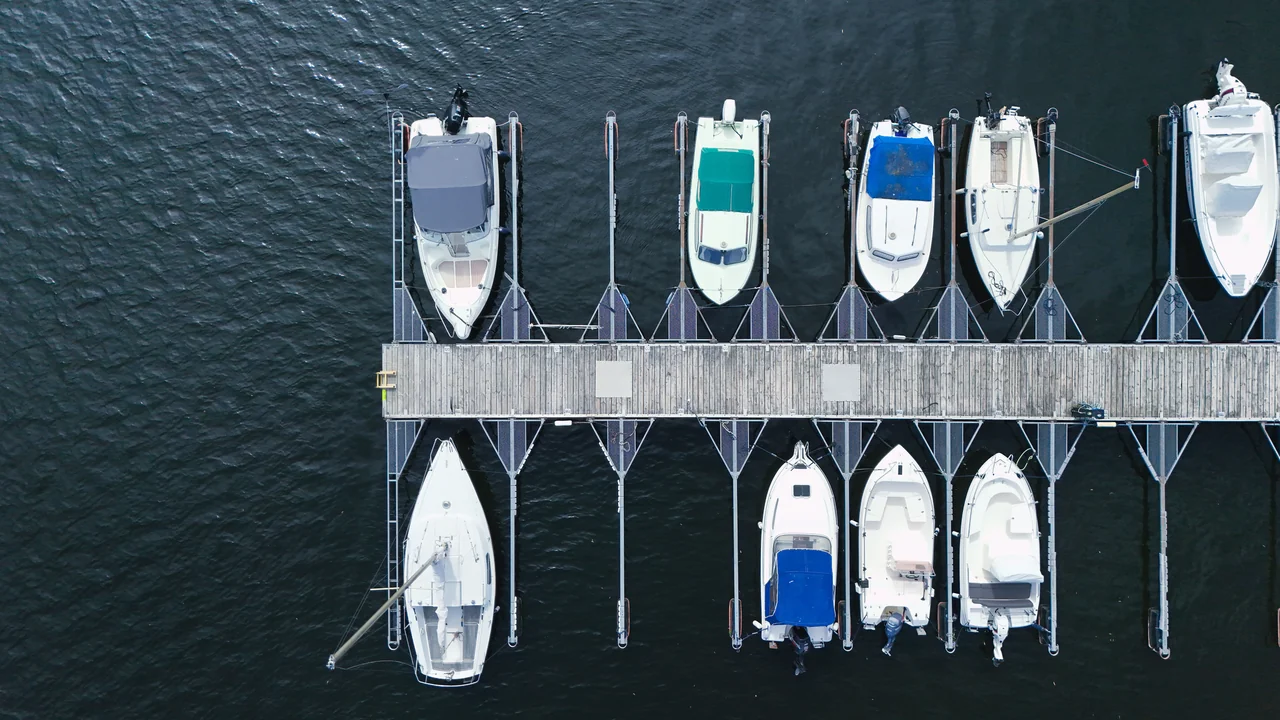
If your waterfront property contains or borders wetlands, you almost certainly need a wetlands dock permit before you can build a dock, pier, or any water-access structure. The permitting process for building near wetlands is more complex than for open-water properties because wetlands are protected under both federal and state laws. This guide walks you through exactly what qualifies as a wetland, which agencies regulate dock construction in these areas, how to get a wetland delineation survey, what mitigation requirements you may face, and the real costs and timelines involved in securing a dock permit wetland area approval.
What Counts as a Wetland for Dock Permit Purposes
For regulatory purposes, wetlands are defined by the U.S. Army Corps of Engineers (USACE) and the Environmental Protection Agency (EPA) as areas that are inundated or saturated by surface or groundwater at a frequency and duration sufficient to support vegetation adapted for life in saturated soil conditions. This definition covers marshes, swamps, bogs, and similar areas. The key takeaway for dock builders is that wetlands are not always obvious—they may appear as dry ground during summer but still meet the legal definition based on soil and plant indicators.
The USACE uses a three-parameter approach to determine wetland status: hydrology (water presence), hydric soils (soils developed under wet conditions), and hydrophytic vegetation (plants adapted to wet conditions). If your property meets all three criteria, it is considered a jurisdictional wetland, and any dock construction will require a building near wetlands permit from the USACE and likely your state environmental agency.
What does this mean for your dock project? Even a small recreational dock can trigger federal and state review if it involves placing fill material, dredging, or building structures within or adjacent to a wetland. The first step is always to determine whether your property contains jurisdictional wetlands.
Wetland Delineation Surveys: The First Step
Before you apply for any permit, you need a professional wetland delineation survey. This survey determines the precise boundaries of any wetlands on your property. Only a qualified wetland scientist or environmental consultant can perform this work. The survey involves soil sampling, vegetation analysis, and hydrology assessment to map the wetland edge.
The cost of a wetland delineation survey varies widely based on property size and complexity. For a typical waterfront lot (1–5 acres), expect to pay between $1,500 and $5,000. Larger properties or those with multiple wetland types can cost $10,000 or more. The survey report must be submitted with your permit application to the USACE and state agencies.
One common mistake property owners make is skipping the delineation survey and assuming they can build outside the wetland boundary based on visual observation. This approach almost always leads to permit delays or denials. The USACE and state agencies require a formal delineation conducted by a certified professional using standardized methods.
USACE Section 404 for Wetlands: The Federal Permit
The primary federal law governing dock construction in wetlands is Section 404 of the Clean Water Act. Administered by the USACE, Section 404 regulates the discharge of dredged or fill material into waters of the United States, including wetlands. Any dock construction that involves placing pilings, concrete, gravel, or other materials in a wetland triggers Section 404 review.
For most residential dock projects in wetlands, you will apply for a Nationwide Permit (NWP) rather than an individual permit. The most relevant NWP for docks is typically NWP 3 (Maintenance) or NWP 14 (Linear Transportation Projects), but the specific permit depends on your project scope and location. Some states have their own regional conditions that modify NWP requirements.
The USACE review process for a nationwide permit takes 30 to 60 days on average. Individual permits, which are required for larger or more impactful projects, can take 6 to 12 months. The application must include the wetland delineation report, project plans, and a statement of compliance with water quality standards.
What Triggers an Individual Permit Instead of a Nationwide Permit
If your dock project exceeds certain thresholds, you may need an individual Section 404 permit. Triggers include:
- More than 0.5 acres of wetland impact
- Docks longer than 200 feet in wetland areas
- Construction in waters designated as “special aquatic sites”
- Projects that could affect threatened or endangered species
- Docks in areas with historic or cultural resources
If your project triggers an individual permit, expect significantly higher costs (often $10,000–$50,000 in consulting and legal fees) and a timeline of 6 to 18 months.
State Wetland Protections: Often Stricter Than Federal
While the USACE handles federal wetland jurisdiction, many states have their own wetland protection laws that are more restrictive. States like Michigan, New Jersey, Oregon, Washington, and Massachusetts have separate state wetland permitting programs that apply to docks. In some states, any wetland area over a certain size (e.g., 2 acres in Michigan) is protected regardless of federal jurisdiction.
State wetland permits often require additional buffer zones, stricter mitigation requirements, and longer review periods than federal permits. You must check with your state Department of Environmental Protection, Department of Natural Resources, or equivalent agency to determine if a state wetlands dock permit is required in addition to the USACE permit.
| State | Wetland Permit Agency | Known for Stricter Rules |
|---|---|---|
| Michigan | EGLE (Dept. of Environment, Great Lakes, and Energy) | Yes — protects wetlands under 2 acres |
| New Jersey | DEP (Dept. of Environmental Protection) | Yes — 50-foot buffer zones required |
| Oregon | DSL (Dept. of State Lands) | Yes — removal-fill permits required |
| Washington | Ecology (Dept. of Ecology) | Yes — 200-foot buffer zones in some cases |
| Florida | DEP (Dept. of Environmental Protection) | Yes — ERP (Environmental Resource Permit) required |
Wetland Mitigation Requirements for Docks
When your dock project unavoidably impacts wetlands, regulators require wetland mitigation to compensate for the loss of wetland functions. Mitigation typically follows a sequence: first avoid impacts, then minimize them, and finally compensate for unavoidable impacts.
For most residential docks, mitigation requirements are minimal if the dock is designed to minimize wetland disturbance. Common mitigation measures include:
- Using helical piles or screw anchors instead of concrete footings
- Elevating the dock deck to allow light and water flow beneath
- Limiting the dock width to 4 feet or less
- Using permeable decking materials
- Planting native wetland vegetation to offset impacts
If your project requires formal mitigation, you may need to purchase mitigation credits from a wetland mitigation bank or create new wetland habitat elsewhere. Mitigation credit costs range from $2,000 to $50,000 per acre, depending on the region and wetland type. For a small dock, the mitigation requirement is usually less than 0.1 acres, so costs are typically in the $500–$5,000 range.
Wetland Mitigation Banking Explained
A wetland mitigation bank is a site where wetlands have been restored, created, or enhanced to generate mitigation credits. Property owners can purchase these credits to satisfy their mitigation obligations. This is often the simplest option for dock builders because the mitigation work is already completed and approved by regulators.
Buffer Zone Rules for Building Near Wetlands
Many states and local jurisdictions require buffer zones—undisturbed areas of natural vegetation—between your dock construction and the wetland boundary. Buffer zones protect water quality, provide wildlife habitat, and reduce sedimentation. Typical buffer widths range from 25 to 200 feet, depending on local regulations.
If your property has a required buffer zone, you may need to adjust your dock location or design to avoid encroaching into the buffer. In some cases, you can apply for a buffer zone variance, but this is a separate permitting process that can add months to your timeline and thousands to your costs.
Pros of Buffer Zones
- Protect water quality from runoff
- Preserve natural aesthetics
- Reduce erosion near the dock
- Support wildlife habitat
Cons for Dock Builders
- Limits dock placement options
- May require longer walkways
- Can increase construction costs
- Adds regulatory complexity
What You Can and Cannot Do Near Wetlands
Understanding the restrictions on activities near wetlands is critical to avoiding enforcement actions and fines. The following table summarizes common allowed and prohibited activities for dock construction in wetland areas.
| Activity | Allowed with Permit | Typically Prohibited |
|---|---|---|
| Building a dock on pilings | Yes, with minimal ground disturbance | No |
| Dredging for boat access | Rarely allowed in wetlands | Yes, unless essential |
| Clearing vegetation | Limited to dock footprint | Broad clearing is prohibited |
| Using heavy equipment | Yes, with mats to minimize soil compaction | Driving equipment directly in wetland |
| Installing utilities | Yes, with directional boring preferred | Trenching through wetland |
| Storing construction materials | Outside wetland boundary only | Inside wetland area |
One activity that is almost never allowed is placing fill material—such as sand, gravel, or concrete—directly into a wetland for dock construction. This triggers the strictest level of USACE review and nearly always requires individual permit review. Instead, use elevated structures on piles or helical anchors that do not require fill.
Costs of Wetland-Related Permits and Surveys
The total cost of obtaining a wetlands dock permit can be significantly higher than a standard dock permit due to the additional surveys, consultant fees, and potential mitigation requirements. The table below breaks down typical costs.
| Item | Typical Cost Range | Notes |
|---|---|---|
| Wetland delineation survey | $1,500–$5,000 | Higher for large or complex properties |
| USACE nationwide permit application fee | $10–$100 | Minimal for most residential projects |
| State wetland permit application fee | $50–$500 | Varies by state |
| Environmental consultant (permitting support) | $2,000–$10,000 | Includes plan preparation and agency coordination |
| Wetland mitigation (if required) | $500–$5,000 | For small dock impacts |
| Buffer zone variance (if needed) | $500–$3,000 | Separate application process |
| Total estimated cost range | $4,500–$23,500 | Includes all permits and surveys |
Summary: Your Action Plan for a Wetlands Dock Permit
Building a dock near wetlands is entirely possible, but it requires careful planning, professional assistance, and patience. The most important first step is to contact a qualified wetland scientist to perform a delineation survey. Once you know the wetland boundaries, you can design your dock to minimize impacts and determine which permits you need.
Start by contacting the USACE district office that covers your area. They can tell you which nationwide permit applies to your project and whether your state has additional requirements. Then contact your state environmental agency to confirm any state-specific wetland permits. For a comprehensive overview of dock permitting across all water types, including wetlands, see our Boat Dock Permit Guide.
Frequently Asked Questions
Can I build a dock near wetlands?
Yes, you can build a dock near wetlands, but you must obtain a wetlands dock permit from the U.S. Army Corps of Engineers under Section 404 of the Clean Water Act, and often from your state environmental agency as well. The key is to design the dock to minimize wetland disturbance—using elevated structures on piles rather than fill materials. Most residential docks qualify for a nationwide permit, which takes 30 to 60 days to process, but you will need a professional wetland delineation survey first.
How do I know if my property has wetlands?
The only definitive way to know if your property has jurisdictional wetlands is to hire a qualified wetland scientist to perform a delineation survey. This professional will analyze soil samples, vegetation types, and hydrology indicators to map wetland boundaries. You can get a preliminary idea by checking the National Wetlands Inventory (NWI) map online, but NWI maps are not precise enough for permit applications. A formal delineation costs between $1,500 and $5,000 for a typical waterfront lot and is required for any permit application.
What is wetland mitigation for dock permits?
Wetland mitigation is a process that compensates for unavoidable impacts to wetlands caused by your dock construction. Regulators require you to first avoid impacts, then minimize them, and finally compensate for any remaining damage. For most small docks, mitigation is minimal—often satisfied by using environmentally friendly construction methods like helical piles or planting native vegetation. If formal mitigation credits are required, you can purchase them from a wetland mitigation bank at costs ranging from $500 to $5,000 for typical dock projects.
Do wetlands make dock permits impossible?
No, wetlands do not make dock permits impossible, but they do add significant complexity and cost compared to building on open water. The approval process takes longer—typically 3 to 12 months—and requires professional surveys and potentially mitigation. However, thousands of docks are built in wetland areas each year under nationwide permits. The key is to work with an experienced environmental consultant who understands the regulatory framework and can design a dock that minimizes wetland impact. Avoidance of fill materials and use of elevated structures are critical for success.
Last updated: July 02, 2026
- U.S. Army Corps of Engineers (USACE) — Section 404 Regulatory Program
- Environmental Protection Agency (EPA) — Wetlands Definition and Delineation Manual
- State environmental agencies for Michigan, New Jersey, Oregon, Washington, and Florida

Dock Permit Guide
DockPermitGuide editor covering boat dock and pier permit requirements, costs, and regulations across the United States, Canada & Australia.