
Dock Piling Cost in 2026: Prices by Material, Length & Installation
 10 min read
1,853 words
10 min read
1,853 words

If you are planning a new dock or repairing an existing one, understanding dock piling cost is essential for your budget. In 2026, the price per piling ranges from roughly $200 for a basic 8-foot treated wood pile to over $1,800 for a large composite or concrete pile, with installation adding significant expense. This guide breaks down dock piling cost by material, length, and installation method, along with replacement costs and contractor pricing factors. You will learn how many pilings your dock needs, what drives material and labor prices, and how to compare wood vs steel dock pilings for your specific project.
Dock Piling Cost by Material Type
The material you choose has the largest impact on your per-pile budget. Each material offers different durability, lifespan, and maintenance requirements, which affect long-term value.
| Material | Cost per Piling (8-20 ft) | Average Lifespan | Best For |
|---|---|---|---|
| Pressure-Treated Wood | $200 – $600 | 15–25 years | Freshwater lakes, budget projects |
| Steel Pipe | $400 – $1,200 | 30–50 years | Deep water, high wave action, marine borers |
| Concrete | $500 – $1,500 | 40–75 years | Saltwater, heavy-duty commercial docks |
| Composite (Fiberglass/PVC) | $600 – $1,800 | 30–50 years | Low maintenance, aesthetic appeal |
Pressure-Treated Wood Piling Cost
Pressure-treated wood pilings are the most affordable option, typically costing $200 to $600 per pile depending on length and diameter. A standard 8-foot pile runs $200–$300, while a 20-foot pile reaches $500–$600. These pilings are treated with chromated copper arsenate (CCA) or alkaline copper quaternary (ACQ) to resist rot and insects. They are widely available and easy to work with, making them the go-to choice for DIY installers. However, they require periodic sealing or staining and are vulnerable to marine borers in saltwater.
Steel Pipe Piling Cost
Steel pipe pilings range from $400 to $1,200 per pile, with prices driven by diameter (typically 8 to 16 inches) and wall thickness. A 20-foot steel pile with a 10-inch diameter averages $800–$1,000. Steel offers excellent strength for deep water or heavy loads and resists marine borers completely. It is also lighter than concrete, reducing transport costs. The downside is susceptibility to corrosion in saltwater unless coated or galvanized, which adds 10–20% to the material cost. For freshwater lakes like Lake Travis or Lake Minnetonka, steel pilings without special coatings can last 30+ years.
Concrete Piling Cost
Concrete pilings cost $500 to $1,500 per pile, making them the most expensive option for residential docks. Precast, prestressed concrete piles are common for commercial and saltwater installations. They are extremely durable, with lifespans exceeding 50 years, and require virtually no maintenance. However, they are heavy (a 20-foot pile weighs 2,000–3,000 pounds), requiring specialized equipment for transport and installation, which can double labor costs. For most homeowners, concrete pilings are only cost-effective for large, permanent docks or in areas with severe termite or borer problems.
Composite Piling Cost
Composite pilings, made from fiberglass or recycled plastic, cost $600 to $1,800 per pile. They are the premium choice for homeowners who want zero maintenance and a clean appearance. Fiberglass pilings are lightweight, strong, and immune to rot, insects, and corrosion. They are ideal for sensitive environments where chemical treatments are restricted, such as within Army Corps of Engineers Section 404 permit boundaries. The major drawback is cost: a 16-foot composite pile can exceed $1,200, making it 2–3 times the price of wood.
Dock Piling Cost by Length

Piling length directly affects material cost and installation difficulty. Longer piles are needed for deeper water, softer lake bottoms, or to meet freeboard requirements in flood zones.
| Piling Length | Pressure-Treated Wood | Steel Pipe | Concrete | Composite |
|---|---|---|---|---|
| 8 feet | $200 – $300 | $400 – $600 | $500 – $700 | $600 – $900 |
| 12 feet | $300 – $450 | $500 – $800 | $700 – $1,000 | $800 – $1,200 |
| 16 feet | $400 – $550 | $600 – $1,000 | $900 – $1,300 | $1,000 – $1,500 |
| 20 feet | $500 – $600 | $800 – $1,200 | $1,200 – $1,500 | $1,200 – $1,800 |
For a typical residential dock on a lake like Lake Minnetonka, 12- to 16-foot pilings are standard. If you are building on a reservoir with fluctuating water levels, such as Lake Travis, you may need 20-foot pilings to account for drawdown periods. Always add 2–3 feet of extra length for embedment depth (the portion driven into the lakebed).
Dock Piling Installation Cost
Installation cost is separate from material cost and can equal or exceed the price of the pilings themselves. Two primary methods are used: driven and jetted.
Driven Piling Installation Cost
Driven installation uses a pile driver (vibratory or impact hammer) to pound the piling into the lakebed. This method costs $300 to $800 per pile, depending on soil conditions and access. For hard clay or rocky bottoms, the cost rises to $600–$800 per pile due to slower progress and increased wear on equipment. Driven pilings provide the highest load capacity and are required for most permanent docks. A typical 4-pile dock (e.g., 8×20 feet) costs $1,200–$3,200 for driven installation alone.
Jetted Piling Installation Cost
Jetted installation uses high-pressure water to wash the piling into sandy or silty bottoms. This method costs $200 to $600 per pile, making it cheaper than driving. It is ideal for soft lakebeds, such as those found in many Florida or Texas reservoirs. However, jetted pilings have lower load capacity and may not meet building codes for larger docks. Jetting is also less precise, requiring careful alignment. For a swim platform or small raft, jetted installation is often sufficient.
Driven Installation Pros
- Highest load capacity
- Works in all soil types
- Meets most building codes
- Longer lifespan
Driven Installation Cons
- Higher cost ($300–$800/pile)
- Requires heavy equipment
- Noisy and disruptive
- Not suitable for shallow water
Jetted Installation Pros
- Lower cost ($200–$600/pile)
- Quieter operation
- Works well in sand/silt
- Less equipment needed
Jetted Installation Cons
- Lower load capacity
- Not for clay or rock
- Less precise alignment
- May not meet code
Dock Piling Replacement Cost vs. New Installation
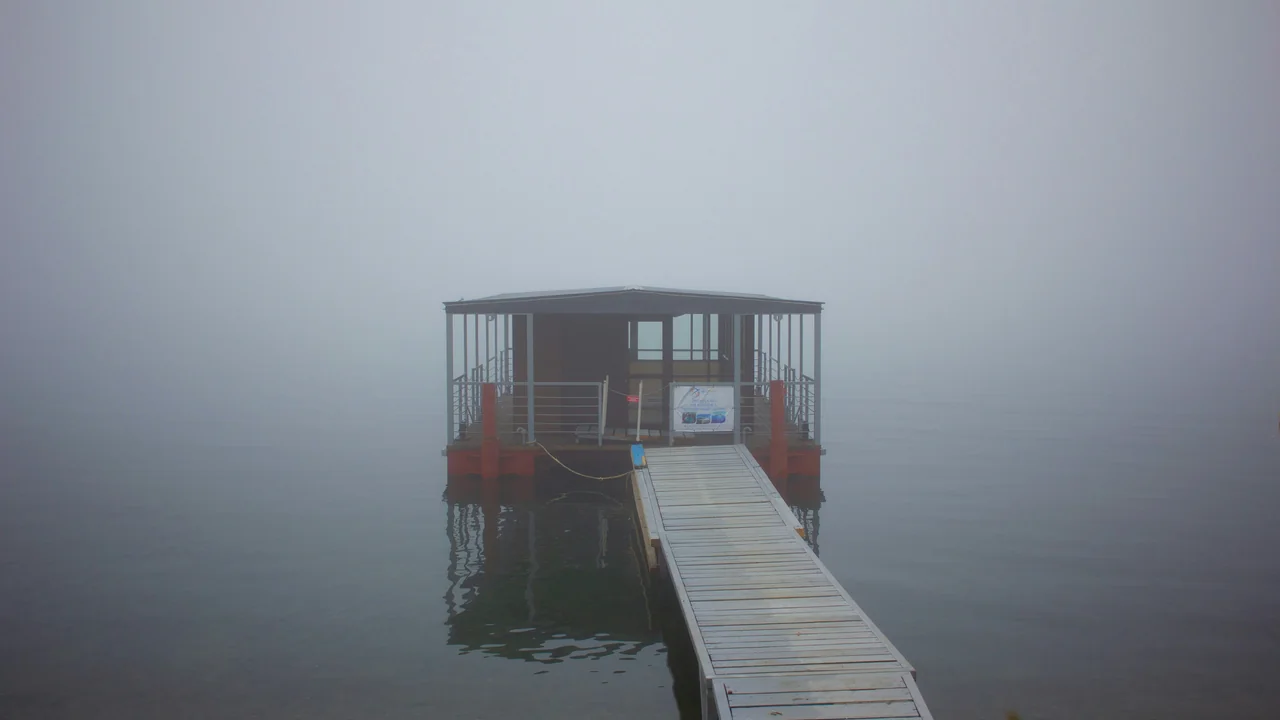
Replacing an existing piling is more expensive per pile than installing new ones because it requires removing the old pile and repairing the dock structure. Replacement cost ranges from $600 to $2,000 per pile, including removal, disposal, and new installation.
Factors that increase replacement cost include:
- Access constraints — replacing a piling in a tight slip or under an existing deck adds 30–50% to labor.
- Pile extraction — pulling a broken or rotted pile can require a crane or winch, costing $200–$500 per pile.
- Permit fees — if the replacement changes the dock footprint, you may need a new permit from the Army Corps or local authority, adding $100–$500.
- Environmental restrictions — on lakes like Lake Travis, replacement of pilings in sensitive habitat may require a Lake Travis dock permit amendment.
For a 4-pile dock needing full replacement, total cost runs $2,400 to $8,000. In contrast, new installation for the same dock (without removal) costs $1,600 to $4,800. If you are replacing only one or two pilings, expect to pay a premium because mobilization fees are spread over fewer piles.
How Many Pilings Does a Dock Need?
The number of pilings required depends on dock size, weight, and intended use. Underestimating this number is a common budget mistake.
| Dock Size (Width x Length) | Typical Use | Number of Pilings | Total Piling Cost Range (Material Only) |
|---|---|---|---|
| 4 ft x 16 ft | Swim platform, small kayak dock | 4–6 | $800 – $3,600 |
| 6 ft x 20 ft | Single boat slip, fishing dock | 6–8 | $1,200 – $6,400 |
| 8 ft x 30 ft | Double boat slip, lounge area | 8–12 | $1,600 – $10,800 |
| 10 ft x 40 ft | Commercial or large residential | 12–16 | $2,400 – $21,600 |
For reference, a typical 6×20-foot dock on Lake Minnetonka uses 6–8 pilings. The Lake Minnetonka dock permit process often specifies minimum piling spacing to protect aquatic vegetation. Always consult a structural engineer or marine contractor for your specific dock design.
Marine Contractor Pricing Factors
Beyond material and installation method, several contractor-specific factors affect your final quote.
- Mobilization fees: Contractors charge $200–$800 to transport equipment to your site. This is a fixed cost, so it is cheaper per pile for larger projects.
- Water depth: If your dock is in water deeper than 6 feet, contractors may need a barge-mounted pile driver, adding $500–$1,500 to the total.
- Soil conditions: Rocky or hard clay bottoms require specialized equipment (e.g., pre-drilling) that adds $100–$300 per pile.
- Seasonal demand: In northern states, spring and summer are peak seasons. Quotes can be 10–20% higher from April to August. Fall and winter often bring discounts of 5–15%.
- Permitting complexity: Projects requiring a Section 404 permit from the Army Corps of Engineers may involve longer timelines and higher contractor fees due to compliance documentation.
Summary and Action Plan
Dock piling cost in 2026 varies widely based on material, length, and installation method. For most residential freshwater docks, pressure-treated wood pilings at $200–$600 per pile offer the best balance of cost and durability. If you need higher strength or longer lifespan, steel pilings at $400–$1,200 are a solid upgrade. Installation adds $200–$800 per pile, with driven methods preferred for permanent structures. Replacement is 30–50% more expensive than new installation due to removal costs.
To get accurate pricing, start by determining your dock size and the number of pilings needed. Then contact 3–4 marine contractors for itemized quotes. Before finalizing, verify permit requirements with your local authority—especially on regulated lakes like Lake Travis or Lake Minnetonka. For a complete picture of your dock project budget, see our 2026 boat dock cost guide.
Frequently Asked Questions
How much does a dock piling cost?
A dock piling costs between $200 and $1,800 per pile, depending on material and length. Pressure-treated wood pilings are the most affordable at $200 to $600, while composite and concrete pilings range from $500 to $1,800. Installation adds $200 to $800 per pile, bringing the total installed cost to $400 to $2,600 per piling.
How much does it cost to replace a dock piling?
Replacing a dock piling costs $600 to $2,000 per pile, including removal of the old piling, disposal, and installation of the new one. This is 30–50% more expensive than new installation due to extraction costs and the need to work around existing dock structure. For a typical 4-pile dock, full replacement runs $2,400 to $8,000.
Are steel pilings better than wood?
Steel pilings are better than wood in deep water, high wave action, and areas with marine borers, offering a lifespan of 30–50 years compared to 15–25 years for wood. However, steel costs $400 to $1,200 per pile versus $200 to $600 for wood, and it can corrode in saltwater without protective coatings. For most freshwater lakes, wood is more cost-effective unless you need extra strength or longevity.
How many pilings does a dock need?
A dock typically needs one piling for every 4 to 6 feet of dock length, depending on width and load. A small 4×16-foot swim platform requires 4–6 pilings, while a 8×30-foot double-slip dock needs 8–12 pilings. Always consult a structural engineer or marine contractor to determine the exact number for your dock design and local building codes.
Last updated: July 02, 2026
- US Army Corps of Engineers – Section 404 Permit Guidelines
- American Wood Protection Association – Treated Wood Standards
- National Marine Manufacturers Association – Dock Construction Guidelines

Dock Permit Guide
DockPermitGuide editor covering boat dock and pier permit requirements, costs, and regulations across the United States, Canada & Australia.