
Dock Electrical Installation Cost: Wiring, Outlets & Lighting (2026)
 12 min read
2,357 words
12 min read
2,357 words
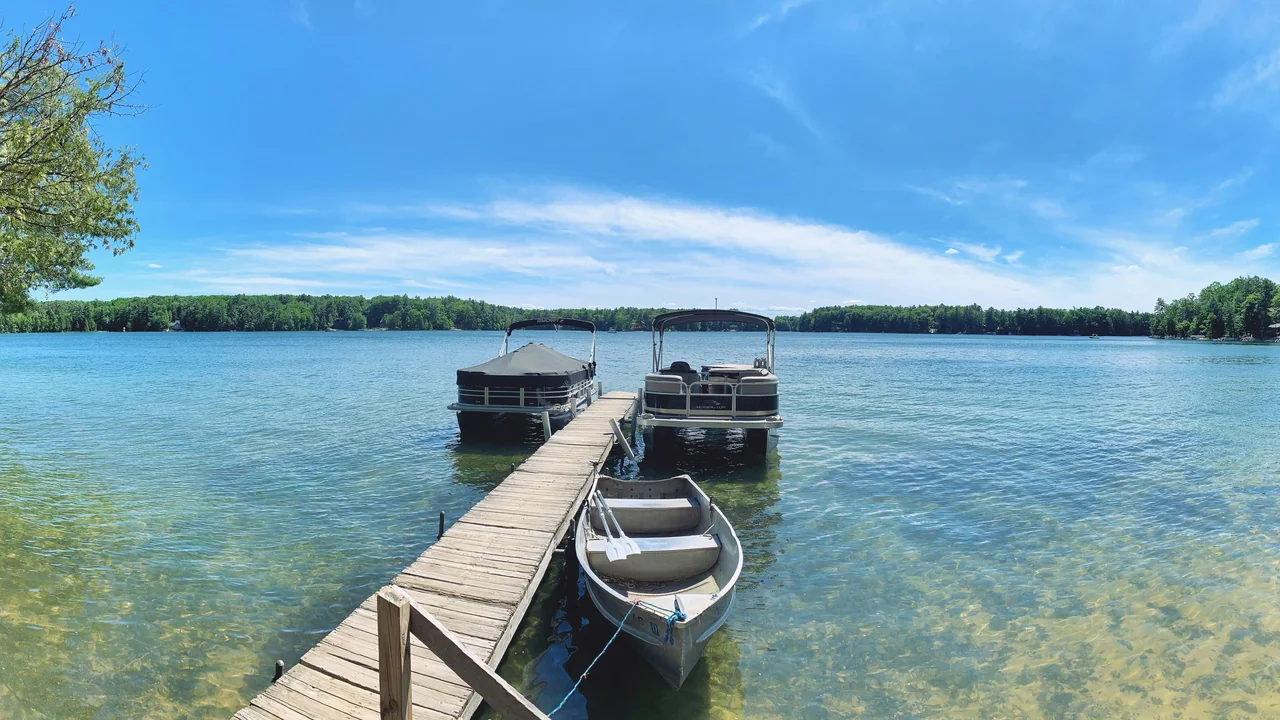
Adding electricity to your dock is a significant upgrade, but the cost can vary wildly depending on what you need. For a basic setup with lighting only, you can expect to pay between $500 and $1,500. A standard installation that includes outlets and lights typically runs $1,500 to $4,000, while a full system with shore power, a boat lift, and comprehensive lighting can cost $4,000 to $10,000 or more. This guide breaks down every component of dock electrical cost, from materials and labor to permit fees and ongoing maintenance, so you can budget accurately for your project.
Dock Electrical Cost by System Type
The single biggest factor in your total dock wiring cost is the complexity of the electrical system you choose. Below are the three most common tiers of installation, with realistic price ranges for 2026.
| System Type | Components Included | Typical Cost Range |
|---|---|---|
| Basic | 2–4 LED dock lights, switch, GFCI-protected circuit, conduit to dock | $500 – $1,500 |
| Standard | 4–6 lights, 2–4 weatherproof outlets, GFCI/ELCI protection, sub-panel | $1,500 – $4,000 |
| Full | Shore power (30A or 50A), boat lift wiring, 6+ outlets, multiple light zones, sub-panel | $4,000 – $10,000+ |
Dock Wiring Cost Breakdown by Component

Understanding what each part of the system costs helps you make informed trade-offs. Here is a detailed look at the major cost drivers for dock wiring cost.
Marine-Grade Wire and Conduit
Standard Romex wire is not allowed on docks. You must use marine-grade, tinned copper wire rated for wet locations. A 50-foot run of 10/3 UF-B marine cable costs around $150–$250. PVC conduit for underground burial adds another $0.50–$1.50 per foot. For a 100-foot run from your house panel to the dock, expect to spend $400–$800 on wire and conduit alone.
GFCI and ELCI Breakers and Outlets
NEC Article 555 requires GFCI (Ground Fault Circuit Interrupter) protection on all dock outlets. A GFCI breaker at the panel costs $40–$80. An ELCI (Equipment Leakage Circuit Interrupter) breaker, which is required for shore power connections, costs $100–$250. Each weatherproof GFCI outlet adds $25–$60. For a standard installation with four outlets, the protection equipment alone totals $200–$500.
Shore Power Pedestal and Receptacle
If you plan to plug in a boat, you need a shore power pedestal. A 30-amp pedestal with a single receptacle costs $200–$400. A 50-amp pedestal runs $400–$800. Installation involves running a dedicated circuit from the sub-panel and installing a weatherproof enclosure. Total installed cost for a shore power setup is typically $600–$1,500.
Dock Lighting Fixtures
LED dock lights are the standard. A single low-voltage LED deck light costs $30–$80. Solar-powered lights are cheaper ($15–$40) but less reliable for consistent illumination. For a dock with 6–8 lights, budget $200–$600 for fixtures. If you want smart controls (Wi-Fi or timer), add $50–$150 for the controller.
Marine Electrical Cost Dock: Labor Rates
Labor is often the largest line item in your marine electrical cost dock estimate. The type of electrician you hire makes a significant difference.
| Electrician Type | Hourly Rate | Typical Hours for Standard Install | Total Labor Cost |
|---|---|---|---|
| General Electrician | $75 – $120 | 8–16 hours | $600 – $1,920 |
| Marine Electrician | $100 – $175 | 8–12 hours | $800 – $2,100 |
Can You Do It Yourself to Save on Dock Outlet Installation Cost?
DIY electrical work on a dock is strongly discouraged and often illegal without a licensed contractor. Most municipalities require a licensed electrician to pull the permit and perform the work. If you attempt it yourself, you risk:
- Failed inspections that delay your project by weeks
- Voiding your homeowner’s insurance if a fire or shock occurs
- Fines for unlicensed electrical work (up to $5,000 in some jurisdictions)
- Safety hazards from improper grounding near water
If you are experienced and your local code allows homeowner-performed work, you can save on labor but still need to pay for materials ($500–$2,000) and permit fees ($50–$300). The dock outlet installation cost for a DIY approach might be $700–$2,500, but the risk is high.
Permit and Inspection Fees for Dock Electrical

Every dock electrical project requires a permit. This is not optional. The cost varies by location but is generally modest compared to the total project.
| Fee Type | Typical Cost | Notes |
|---|---|---|
| Electrical Permit | $50 – $300 | Based on project value; higher for shore power |
| Inspection Fee | $75 – $200 | Often included in permit fee; separate in some counties |
| Plan Review Fee | $50 – $150 | For complex installations with sub-panels |
For a typical standard installation, expect total permit and inspection costs of $150–$500. This is a small price to ensure your dock electrical cost includes a safe, code-compliant system. Always check with your local building department before starting work. For lake-specific rules, see guides like the Lake Norman Dock Permit: Duke Energy Rules & How to Apply (2026) for utility-specific requirements.
Annual Maintenance Costs for Dock Electrical Systems
After installation, your dock electrical system requires ongoing maintenance to remain safe and functional. Budget for these recurring costs.
- Annual inspection: $100–$250 for a licensed electrician to check GFCI/ELCI function, corrosion, and wire integrity
- GFCI/ELCI breaker replacement: $50–$150 every 3–5 years (they wear out from constant moisture exposure)
- Outlet replacement: $30–$80 per outlet every 2–3 years if corrosion is visible
- Light bulb/LED fixture replacement: $20–$100 per year depending on number of fixtures
Total annual maintenance for a standard system is typically $200–$600. For a full system with shore power, budget $300–$800 per year. Neglecting maintenance is dangerous — a corroded outlet near water can cause electrocution. Include maintenance in your long-term dock electrical cost planning.
DIY Maintenance Pros
- Lower annual cost ($50–$150 for parts only)
- Flexible schedule
- Learn your system
DIY Maintenance Cons
- Risk of missing hidden corrosion
- No professional liability if something fails
- May void warranty on equipment
NEC Article 555 Compliance Cost
NEC Article 555 specifically governs marinas and boatyards. Compliance is not optional for dock electrical installations. Here is what it requires and what it costs.
GFCI Protection for All Outlets
Every 15A and 20A, 125V receptacle on a dock must be GFCI-protected. This adds $40–$80 per circuit for a GFCI breaker. For a standard install with two circuits, budget $80–$160 just for this requirement.
ELCI Protection for Shore Power
Any 30A or 50A shore power receptacle must have ELCI protection. An ELCI breaker costs $100–$250. This is a non-negotiable safety device that prevents electrocution from equipment leakage. Skipping it is a code violation and a serious safety risk.
Grounding and Bonding
The dock must have a grounding electrode system (a ground rod driven into the earth or water bottom). This costs $100–$300 including materials and labor. All metal dock components (lifts, rails, cleats) must be bonded together. Bonding wire and connectors add $50–$200.
Total NEC Article 555 compliance cost for a standard installation is typically $400–$900. For a full system with shore power, expect $700–$1,500. This is not optional — your inspection will fail without it.
Trenching and Conduit to the Dock
Running power from your house to the dock often requires underground trenching. This is a major cost factor that depends on distance and soil conditions.
| Distance | Soil Type | Trenching Cost | Conduit Cost | Total |
|---|---|---|---|---|
| 50 feet | Soft soil (no rock) | $300 – $600 | $50 – $100 | $350 – $700 |
| 50 feet | Rocky soil | $600 – $1,200 | $50 – $100 | $650 – $1,300 |
| 100 feet | Soft soil | $600 – $1,200 | $100 – $200 | $700 – $1,400 |
| 100 feet | Rocky soil | $1,200 – $2,500 | $100 – $200 | $1,300 – $2,700 |
If your dock is accessible by water only, you may need to run conduit along the dock structure or underwater. Underwater conduit is significantly more expensive ($50–$100 per foot) and requires specialized installation. For most lakefront properties, trenching is the most cost-effective option.
How to Save on Dock Electrical Cost
While you should never compromise on safety, there are legitimate ways to reduce your dock electrical cost without cutting corners.
- Bundle with other dock work: If you are building a new dock or installing a boat lift, have the electrician do all the work at once. This saves on mobilization fees and trenching costs. See How Much Does a Boat Lift Cost in 2026? Prices by Type & Size for lift pricing.
- Use LED fixtures: LEDs last longer and use less power, reducing both installation and operating costs over time.
- Choose a standard system over full: If you don’t need shore power, a standard system with outlets and lights costs half as much.
- Get multiple quotes: Marine electrician rates vary by 20–40%. Get at least three quotes and ask for a fixed-price contract.
- Consider a boathouse: If you are adding a boathouse, the electrical work is integrated into the structure, which can be more efficient. See How Much Does a Boathouse Cost in 2026? Complete Price Guide for pricing.
Regional Cost Variations
Your location significantly affects marine electrical cost dock estimates. Here are typical adjustments by region.
| Region | Labor Rate Adjustment | Material Cost Adjustment | Permit Fee Range |
|---|---|---|---|
| Northeast | +15–25% | +10–15% | $150 – $400 |
| Southeast | Base | Base | $50 – $250 |
| Midwest | -5–10% | -5–10% | $50 – $200 |
| West Coast | +20–35% | +15–25% | $200 – $500 |
| Great Lakes | +5–15% | +5–10% | $100 – $300 |
For specific state requirements, consult state-specific guides like Boat Dock Permit in Wisconsin: Complete 2026 Guide, which may include electrical permit rules unique to that jurisdiction.
Summary
Your total dock electrical cost depends on the system complexity, labor rates, and local permit fees. A basic lights-only system costs $500–$1,500. A standard system with outlets and lights runs $1,500–$4,000. A full system with shore power and boat lift wiring costs $4,000–$10,000 or more. Always budget for NEC Article 555 compliance ($400–$1,500), permit fees ($150–$500), and annual maintenance ($200–$800).
Your first step should be to contact a licensed marine electrician in your area for a site-specific quote. Simultaneously, call your local building department to confirm permit requirements and fees. For projects involving a boat lift, also check Boat Lift Permit Requirements: Do You Need a Separate Permit? (2026) to ensure you have all necessary approvals before starting electrical work.
Frequently Asked Questions
How much does dock electrical installation cost?
The total cost ranges from $500 for a basic lights-only system to $10,000 or more for a full system with shore power and boat lift wiring. A standard installation with outlets and lights typically costs $1,500 to $4,000. This includes materials, labor, permit fees, and NEC compliance equipment. Your exact cost depends on distance from the house, soil conditions for trenching, and local labor rates.
Do I need a marine electrician for my dock?
While a general electrician can legally perform dock electrical work in most areas, a marine electrician is strongly recommended. Marine electricians charge $100–$175 per hour versus $75–$120 for a general electrician, but they complete the job faster and know NEC Article 555 requirements. A general electrician may fail inspection if they miss specific dock code requirements, costing you time and money. For any system with shore power or a boat lift, a marine electrician is worth the premium.
How much does shore power cost for a dock?
Adding shore power to a dock typically costs $600 to $1,500 for a 30-amp setup and $800 to $2,000 for a 50-amp setup. This includes the shore power pedestal ($200–$800), ELCI breaker ($100–$250), dedicated circuit wiring, and labor. If you are adding shore power as part of a full system, the incremental cost is lower because the trenching and sub-panel are already budgeted. Always ensure the shore power receptacle is marine-rated and installed by a licensed electrician.
What does dock wiring inspection cost?
Dock electrical inspection fees typically range from $75 to $200, though this is often included in the permit fee. The total permit and inspection cost for a standard installation is $150 to $500. Inspections verify GFCI and ELCI protection, proper grounding, conduit burial depth, and wet-location rating of all components. Your local building department schedules the inspection after the work is complete. Failing an inspection means paying for re-inspection ($50–$100) plus any correction costs.
Can I wire my dock myself to save money?
Yes, if you are a competent DIYer and your local jurisdiction allows owner-performed electrical work. You must pull a permit, pass all inspections, and follow NEC Article 555. Many homeowners save $1,000–$3,000 by DIYing trenching and rough wiring, then hiring an electrician for the panel connections and final inspection.
Do I need a separate electrical permit for my dock?
Yes, in most jurisdictions. The dock electrical permit is separate from the dock structure permit. Fees typically range from $50–$300. Some counties combine them into a single waterfront permit. Check with your local building department — see our Dock Permit Cost guide for typical fee schedules.
What size wire do I need for a dock?
Wire size depends on the total load and distance from the main panel. For a 100-foot run with 30-amp service, 10 AWG copper is typical. For 50-amp service at 150 feet, you may need 6 AWG or 4 AWG to prevent voltage drop. Always have a licensed electrician calculate the correct gauge based on your specific loads.
How deep does dock electrical conduit need to be buried?
NEC requires minimum 18 inches of cover for residential branch circuits. Many local codes require 24 inches in waterfront areas to protect against erosion and landscaping work. Conduit under driveways or parking areas needs 24 inches minimum. Always verify with your local building department — requirements vary by municipality.
What is the lifespan of dock electrical components?
Marine-rated receptacles and switches last 5–10 years in freshwater and 3–7 years in saltwater. Wiring inside properly sealed conduit can last 20+ years. GFCI and ELCI breakers typically need replacement every 10–15 years. Regular maintenance and prompt replacement of corroded components extends overall system life significantly.
Can I use standard outdoor electrical boxes on my dock?
No. Standard outdoor boxes are not rated for the constant moisture, temperature swings, and UV exposure found in waterfront environments. You must use marine-rated enclosures — typically stainless steel or heavy-duty polycarbonate with corrosion-resistant gaskets. Using non-marine boxes voids your insurance and fails inspection.
Last updated: July 16, 2026
- National Electrical Code (NEC) Article 555 – Marinas and Boatyards
- Local building department fee schedules (multiple jurisdictions)
- Marine electrician rate surveys (2025–2026)
- US Army Corps of Engineers – Dock Electrical Safety Guidelines

Dock Permit Guide
DockPermitGuide editor covering boat dock and pier permit requirements, costs, and regulations across the United States, Canada & Australia.