
Multi-Slip Dock Permit: Rules for Two or More Boat Slips (2026)
 13 min read
2,504 words
13 min read
2,504 words

If you are planning a dock for two or more boats, the permitting process becomes more complex than a single-slip structure. A multi-slip dock permit is required in most jurisdictions when your dock will accommodate two or more watercraft. This guide covers the specific rules, higher fees, and stricter review processes you will face when building a dock with multiple slips in 2026. You will learn when a multi-slip project triggers a higher permit tier, how residential and commercial thresholds differ, and what setbacks and navigation reviews apply.
When Does a Multi-Slip Dock Trigger a Higher Permit Tier?
The moment you plan for more than one boat slip, most state and federal agencies classify your project differently than a single-slip dock. This is not a minor paperwork change — it often shifts your application from a simple “general permit” or “exemption” to a “standard permit” or “individual permit” requiring public notice and environmental review.
The trigger point is often tied to the total square footage of the dock platform and the number of boat slips. For example, under USACE Section 404 nationwide permits, a single-slip dock under 400 square feet may qualify for NWP 16, but a multi-slip dock over that size often requires a pre-construction notification (PCN) or an individual permit. State agencies like the Florida Department of Environmental Protection (FDEP) or Texas Parks and Wildlife Department (TPWD) have similar thresholds.
What this means for your project: expect a longer review timeline (4-12 weeks vs. 2-4 weeks for a single slip), higher application fees, and a greater likelihood of conditions being attached to your permit — such as seasonal use restrictions or mandatory lighting.
Residential vs. Commercial Threshold for Multi-Slip Docks

One of the most critical distinctions in multi-slip dock permitting is whether your dock is classified as residential or commercial. The threshold is typically 3 to 4 slips. In many states, a residential dock can have up to 3 slips without triggering commercial permitting requirements. Once you reach 4 slips, the dock is often reclassified as a commercial or community dock, which brings a completely different set of rules.
| Number of Slips | Typical Classification | Permit Type | Example States |
|---|---|---|---|
| 1 slip | Residential | General / Nationwide | All states |
| 2-3 slips | Residential multi-slip | Standard individual permit | Florida, Texas, Michigan |
| 4+ slips | Commercial / Community | Commercial permit | California, New York, Washington |
For residential property owners, staying at or below 3 slips is the safest way to avoid commercial permitting. If you are building a dock for personal use with a neighbor, you must ensure the total slip count does not cross the residential threshold. A shared-slip arrangement between two homeowners (one slip each) is fine, but adding a third slip for a guest boat may push you into commercial territory in some jurisdictions.
Increased Setback Requirements for Wider Multi-Slip Docks
A multi-slip dock is wider than a single-slip dock, and that width triggers larger setback requirements from property lines, adjacent docks, and navigation channels. Most state DNRs and local zoning boards require a minimum side setback of 10 to 25 feet from your property line for any dock. For a multi-slip dock, those setbacks often double.
Why the increased setback? A wider dock occupies more of the waterway, potentially interfering with navigation, water flow, and adjacent property owners’ views and access. Local planning boards are particularly strict about multi-slip docks on narrow lakes or rivers where the dock could protrude into the main channel.
For example, on Lake Norman in North Carolina, Duke Energy requires a minimum 25-foot setback from the property line for any dock, but a dock with 3 or more slips must also be set back at least 50 feet from the nearest navigation channel. Similarly, in Wisconsin, the DNR requires a 30-foot setback from the ordinary high-water mark (OHWM) for a dock with 2 or more slips, compared to 15 feet for a single slip.
When designing your multi-slip dock, factor in these larger setbacks. You may need to reduce the number of slips or shift the dock location to meet the requirements. A site survey by a licensed land surveyor is essential before you submit any plans.
Navigation Impact Review for Multi-Slip Docks
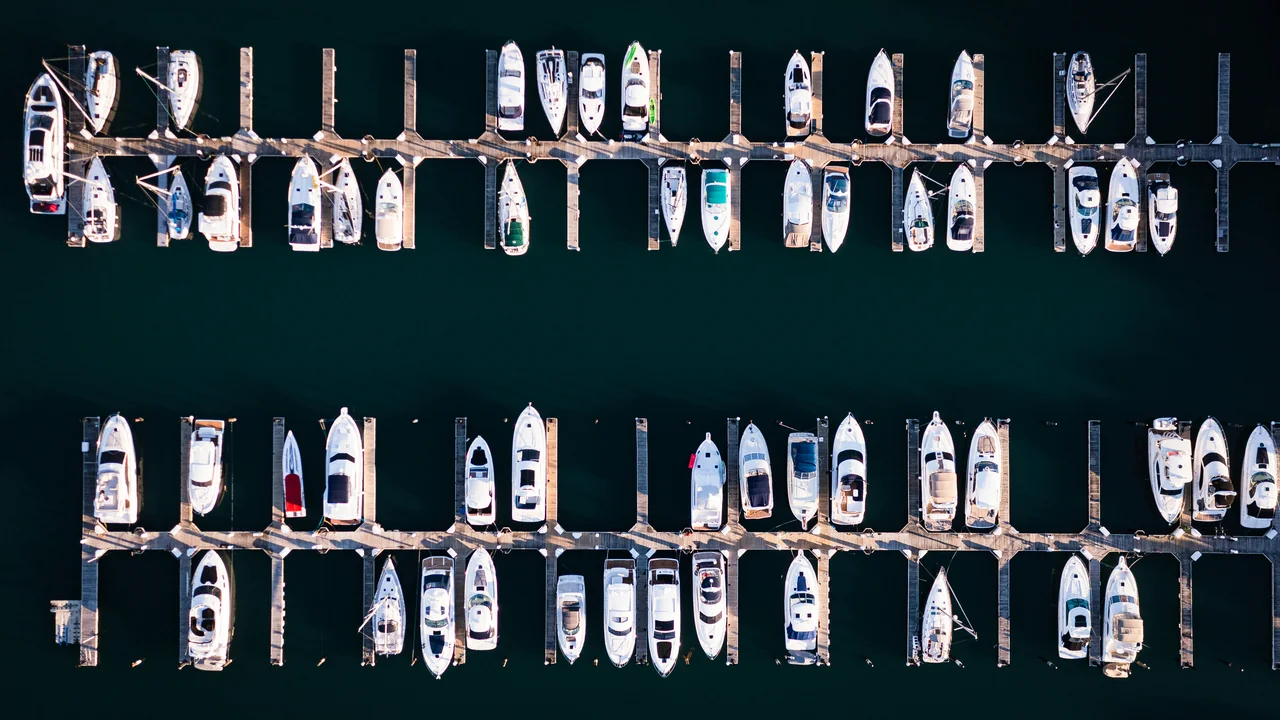
Any dock that extends into a navigable waterway must not obstruct navigation. For a multi-slip dock, the navigation impact review is more rigorous. The USACE and state agencies will evaluate whether your dock creates a hazard for boat traffic, especially if it extends into a channel or near a boat ramp.
The review typically considers three factors:
- Dock length — Does the dock extend more than 25% of the waterway width?
- Slip orientation — Are slips perpendicular to the channel, increasing the obstruction risk?
- Boat size — Will the dock accommodate vessels over 26 feet, requiring more maneuvering space?
In many states, a multi-slip dock must include a navigation light on the outermost corner if it extends more than 100 feet from the shoreline. Some jurisdictions also require a “no-wake” zone marker near the dock to alert passing boats.
If your property is on a river or a narrow lake, consider a jet ski dock or PWC lift as an alternative to a full-size boat slip. Personal watercraft docks are narrower and often exempt from the most stringent navigation reviews.
Homeowner vs. Neighbor Shared-Slip Arrangements
Sharing a multi-slip dock with a neighbor is a common scenario, but it complicates the permitting process. The key question is: who owns the dock? If the dock is on one owner’s property but used by both, the permit must still list the property owner as the applicant. The neighbor’s use is considered a “license” or “easement,” not a separate permit.
However, if the dock crosses a property line or is built on a shared waterfront, you may need a joint permit application. Some states, like Michigan, require a “shared dock agreement” signed by both property owners and notarized before the permit is issued. This agreement must specify maintenance responsibilities, liability insurance, and slip assignments.
Shared Dock Advantages
- Lower cost per owner
- Reduced environmental footprint (one dock vs. two)
- Easier to meet setback requirements on small lots
Shared Dock Risks
- Permit complexity increases
- Disputes over maintenance and slip assignments
- Both owners may be liable for violations
If you plan to share a multi-slip dock, get a written agreement in place before you apply for the permit. Include a clause that addresses what happens if one owner sells their property. Some states require the permit to be transferred with the property, which can be a problem if the new owner does not want a shared dock arrangement.
For more on shared dock arrangements and the specific rules for Lake Norman, see our detailed guide on Lake Norman dock permits and Duke Energy rules.
States That Restrict Residential Multi-Slip Docks
Not all states allow residential multi-slip docks. Some states have outright bans or severe restrictions on the number of slips a residential property can have. Knowing these restrictions before you buy property or design a dock can save you thousands of dollars in planning costs.
| State | Residential Multi-Slip Restriction | Authority |
|---|---|---|
| California | Maximum 2 slips per residential parcel on most lakes | California Coastal Commission |
| Minnesota | Maximum 2 slips on public waters; 3+ requires commercial permit | MN DNR |
| New York | Maximum 2 slips on Adirondack Park waters; 3+ requires APA permit | Adirondack Park Agency |
| Oregon | Maximum 2 slips on most rivers and lakes under 50 acres | Oregon DSL |
| Washington | Maximum 3 slips; 4+ requires Shoreline Substantial Development Permit | WA Dept. of Ecology |
Even in states without an outright ban, local county or municipal codes may impose stricter limits. For example, in Door County, Wisconsin, the county zoning ordinance limits residential docks to 2 slips, regardless of the state DNR allowance. Always check both state and local rules before proceeding.
If you are in a state with strict limits, consider alternatives like a boat lift permit for a single slip with a lift that can store two boats stacked vertically. This is not a multi-slip dock, but it achieves a similar storage capacity without triggering multi-slip rules.
How to Apply for a Multi-Slip Dock Permit: Step-by-Step Process
The application process for a multi-slip dock permit is more involved than for a single slip. Follow these steps to avoid delays and denials.
Identify which agencies have authority: USACE (navigable waters), state DNR/DEQ, local county planning, and possibly a lake authority or homeowners’ association.
Engage a licensed surveyor and a dock designer who has experience with multi-slip permits in your area. They will prepare site plans, bathymetric surveys, and environmental assessments.
Many agencies offer a pre-application meeting to review your proposal before you pay the full fee. This is highly recommended for multi-slip projects.
Standard individual permits for multi-slip docks require a 30-day public comment period. Adjacent property owners will be notified.
If approved, your permit will include specific conditions: slip dimensions, lighting requirements, seasonal use limits, and maintenance obligations.
The total timeline for a multi-slip dock permit is typically 8-16 weeks, compared to 2-6 weeks for a single-slip dock. Budget for application fees ranging from $200 to $2,000, plus professional fees for surveys and designs.
For a detailed look at costs and timelines in a specific state, refer to our guide on boat dock permits in Wisconsin, which covers multi-slip rules for that state.
Cost Implications of a Multi-Slip Dock Permit
The cost of a multi-slip dock permit is higher than a single-slip permit due to the more intensive review process. Here is a breakdown of typical costs:
| Cost Item | Single-Slip Dock | Multi-Slip Dock (2-3 slips) |
|---|---|---|
| Application fee (state/local) | $50 – $300 | $200 – $1,000 |
| USACE pre-construction notification | $0 (included in NWP) | $100 – $500 |
| Site survey and plans | $500 – $1,500 | $1,500 – $4,000 |
| Environmental assessment (if required) | $0 – $500 | $500 – $2,500 |
| Total estimated cost | $550 – $2,300 | $2,300 – $8,000 |
These costs do not include the actual dock construction, which for a multi-slip dock can range from $15,000 to $60,000 depending on materials, length, and slip configuration. For a reference on boat lift costs, see our guide on boat lift costs in 2026.
Summary
Building a multi-slip dock requires navigating a higher permit tier, stricter setbacks, and a navigation impact review. The residential vs. commercial threshold is typically 3-4 slips, and some states restrict residential multi-slip docks altogether. Start by contacting your state DNR and local planning office to determine the specific rules for your waterway. Hire a professional dock designer early in the process to avoid costly redesigns. For most property owners, a 2-slip dock is the safest option to stay within residential permitting limits while still accommodating multiple boats.
Frequently Asked Questions
Do I need a special permit for a two-boat dock?
Yes, in most jurisdictions a dock with two or more boat slips requires a standard individual permit rather than a general or nationwide permit. This means you will need to submit a more detailed application, including site plans, a navigation impact assessment, and often a public notice period. The USACE and state DNR both have jurisdiction over navigable waters, so you will likely need permits from both agencies. Expect a longer processing time of 8-16 weeks and higher application fees compared to a single-slip dock.
How many slips can a residential dock have?
The maximum number of slips for a residential dock varies by state, but the most common limit is 2 to 3 slips. States like California and Minnesota restrict residential docks to 2 slips, while others like Texas and Florida allow up to 3 slips before the dock is classified as commercial. Local county ordinances may impose stricter limits than the state. Always check with your local planning department before designing a dock with more than 2 slips.
Do multi-slip docks need a commercial permit?
Not automatically, but the threshold is typically 3 to 4 slips. In most states, a dock with 2 slips is still considered residential, while a dock with 4 or more slips is classified as commercial or community. The exact threshold depends on state law and local zoning codes. A commercial permit requires a public hearing, additional environmental reviews, and higher fees. If you are building a dock for personal use, keeping the slip count at 2 or 3 is the safest way to avoid commercial permitting requirements.
Can I share my multi-slip dock with a neighbor?
Yes, sharing a multi-slip dock with a neighbor is allowed in most states, but it requires careful planning. You must have a written shared dock agreement that specifies maintenance responsibilities, slip assignments, and liability insurance. Some states require this agreement to be notarized and submitted with the permit application. If the dock crosses a property line, you may need a joint permit application. Be aware that if the neighbor sells their property, the new owner may not want to continue the shared arrangement, so include a clause addressing this scenario.
Do I need a federal permit for a multi-slip dock?
Yes, if your dock is located in navigable waters of the United States, you likely need a USACE permit under Section 404 or Section 10 of the Rivers and Harbors Act. Multi-slip docks that exceed 500 square feet of overwater structure typically require an Individual Permit, which includes a public notice period.
Can I build a multi-slip dock on a lake with a homeowners association?
Yes, but you must also comply with HOA covenants, which often restrict dock size, slip count, and design materials. Check your HOA’s architectural review board requirements before applying for government permits. HOA approval does not replace state or federal permits.
What happens if I build a multi-slip dock without a permit?
Unpermitted docks can result in fines ranging from $500 to $25,000 per day, plus an order to remove the structure at your expense. Some states, like California and Washington, also impose restoration requirements for habitat damage. Always obtain permits before construction begins.
How long does a multi-slip dock permit take?
For a two-slip dock under a general permit, expect 4–8 weeks. For a four-slip dock requiring an Individual Permit and public notice, the timeline extends to 6–18 months. The USACE Individual Permit process alone averages 120–180 days for review.
Last updated: July 16, 2026
- US Army Corps of Engineers (USACE) – Nationwide Permit 16 (Return to Uplands) and Individual Permit Process
- State DNR websites for California, Florida, Texas, Michigan, Wisconsin, Minnesota, New York, Oregon, Washington
- Duke Energy Lake Management – Lake Norman Dock Permit Guidelines

Dock Permit Guide
DockPermitGuide editor covering boat dock and pier permit requirements, costs, and regulations across the United States, Canada & Australia.