
Private Lake Dock Permit: Do You Need One? Rules Explained (2026)
 11 min read
2,158 words
11 min read
2,158 words
If you own a private lake or pond, you might assume you can build a dock without any government oversight. The short answer is that a private lake dock permit is not always required, but the assumption that “it’s my property so I don’t need a permit” is often wrong. This guide will explain exactly when you need a permit for a dock on a private lake, which agencies are involved, and how HOA rules add another layer of complexity. You will learn the difference between a truly private pond and a lake that falls under state or federal jurisdiction, saving you from costly fines or forced removal of your dock.
Why “Private Lake” Does Not Mean “No Permits”
The most common myth among waterfront property owners is that a private lake is exempt from all permitting requirements. This misconception leads to unpermitted docks that can trigger enforcement actions from multiple agencies. The reality is that jurisdiction over a water body depends on its physical characteristics and legal status, not just the ownership of the surrounding land.
A lake may be privately owned but still be considered “waters of the United States” under the Clean Water Act if it has a surface water connection to a navigable waterway. Even without a direct connection, state agencies often regulate docks on any lake larger than a certain acreage, regardless of ownership. The private lake dock permit requirement hinges on factors like wetland presence, tributary connections, and state-specific definitions of “public waters.”
You must verify your lake’s classification before assuming you can build without a permit. Contacting your state’s Department of Natural Resources (DNR) or equivalent agency is the first step. Ignorance of these rules does not protect you from enforcement actions, which can include fines of thousands of dollars and orders to remove the structure at your own expense.
When Private Lakes Still Need Permits: Wetlands and Navigable Connections
Even a private lake that is entirely on your land may require a permit if it contains wetlands or connects to a navigable waterway. The U.S. Army Corps of Engineers (USACE) has jurisdiction under Section 404 of the Clean Water Act over any discharge of dredged or fill material into “waters of the United States,” which includes wetlands adjacent to private lakes.
Wetlands on Private Lakes Trigger Federal Oversight
If your private lake has wetland areas along its shoreline, building a dock may require a USACE permit. The agency defines wetlands as areas that are inundated or saturated by surface or groundwater at a frequency and duration sufficient to support vegetation adapted for life in saturated soil conditions. A dock built on pilings through a wetland area is considered a discharge of fill material, even if minimal.
The permit process for wetlands involves a jurisdictional determination, which can take 30 to 60 days. You will need to submit a delineation report prepared by a qualified wetland scientist. The USACE will then determine if your project qualifies for a Nationwide Permit (typically NWP 18 for minor structures) or requires an Individual Permit, which is more expensive and time-consuming.
Navigable Connection to Public Waters
If your private lake has a creek, stream, or channel that connects to a navigable waterway, even seasonally, the lake may be considered part of the navigable waters of the United States. This triggers both USACE and state permitting requirements. The connection does not need to be permanent; intermittent flows during heavy rains can establish jurisdiction.
For example, a private lake in Texas that drains into a tributary of the Colorado River is subject to Texas Commission on Environmental Quality (TCEQ) and USACE oversight. The dock permit process for such a lake is identical to that for a public lake. You must submit a pre-construction notification to the USACE and obtain a state water quality certification.
HOA-Controlled Private Lakes: Separate Rules You Must Follow
Many private lakes are managed by homeowners associations (HOAs) that have their own set of rules for docks and piers. Even if your state and federal agencies do not require a permit, the HOA may have strict architectural guidelines. These rules are separate from government regulations and are enforced through covenants, conditions, and restrictions (CC&Rs).
HOAs often require approval for any dock construction, including design specifications, materials, and placement. Common HOA restrictions include limits on dock size, prohibition of covered boat lifts, and requirements for uniform color schemes. You must submit plans to the HOA architectural review committee before starting construction. Failure to comply can result in fines, liens on your property, or forced removal of the dock at your expense.
Some HOAs also require that the dock be built by a licensed contractor from an approved list. The review process typically takes 2 to 4 weeks. You should request a copy of the HOA’s dock and pier policy before purchasing property on a private lake to avoid surprises.
Truly Private Ponds on Your Own Land: Typically Exempt
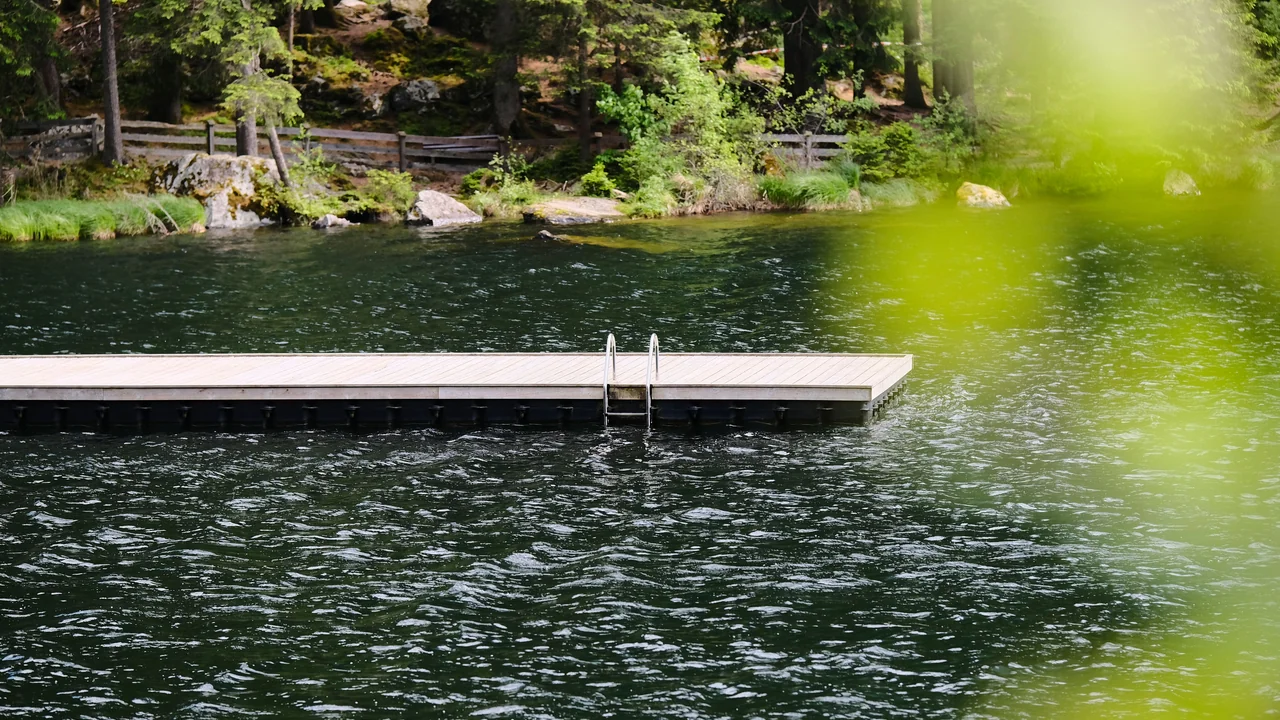
A truly private pond that has no surface water connection to any other water body and is not classified as a wetland is usually exempt from federal and state dock permit requirements. This applies to ponds built entirely within your property boundaries that are fed by groundwater or rainwater, with no inlet or outlet streams.
However, “usually exempt” does not mean “always exempt.” Some states have regulations that apply to any water body larger than a certain size, regardless of connectivity. For example, Minnesota requires a permit for any structure on a pond larger than 10 acres, even if it is entirely on private land. You must check your state’s specific regulations before assuming exemption.
Even if no permit is required, local zoning ordinances may apply. Some counties have setback requirements from property lines or restrict dock construction in areas designated as floodplains. A 2025 survey by the National Association of Counties found that 34% of rural counties have some form of dock regulation for private ponds.
State-by-State Private Lake Dock Rules
The requirement for a private lake dock permit varies significantly from state to state. Some states regulate all docks on any water body larger than a specific size, while others only regulate docks on public waters. The table below summarizes the rules for five states with high private lake density.
| State | Private Lake Dock Permit Required? | Triggering Factor | Permitting Agency |
|---|---|---|---|
| Texas | Yes, if lake is > 10 acres or connected | Lake size or surface water connection | Texas Parks and Wildlife Department |
| Florida | Yes, if lake has navigable connection | Navigable waterway link | Florida Department of Environmental Protection |
| Michigan | No, unless public access exists | Public access or navigable link | Michigan Department of Environment, Great Lakes, and Energy |
| Minnesota | Yes, if lake is > 10 acres | Lake size regardless of ownership | Minnesota Department of Natural Resources |
| Georgia | No, if lake is fully private | No connection to public waters | Georgia Department of Natural Resources |
This table illustrates that you cannot rely on a general rule. For example, a private lake in Minnesota that is 15 acres requires a permit even if it has no connection to any other water body. In contrast, a private lake of the same size in Georgia is exempt as long as it has no navigable connection. Always check your state’s specific regulations before proceeding.
Common Misconceptions About Private Water Rights
Several persistent myths lead property owners to build docks without permits. Understanding the truth behind these misconceptions can save you from legal trouble.
Myth: “I own the lake bed, so I can build anything”
Owning the land under the lake does not give you unrestricted rights to build structures. Federal and state governments have authority over water quality, navigation, and wetlands regardless of who owns the lake bed. The Clean Water Act applies to any water body that falls under federal jurisdiction, even if the land is privately owned.
Myth: “No permit needed because the lake is man-made”
Many property owners believe that man-made lakes are exempt from permitting. This is false. Man-made lakes are subject to the same regulations as natural lakes if they have wetlands, navigable connections, or meet state size thresholds. In fact, some states have stricter rules for man-made lakes because they are often created in sensitive areas.
Myth: “A small dock doesn’t need a permit”
Size is not a reliable indicator of permit requirements. A small dock can still impact wetlands, alter water flow, or violate state regulations. Many states require a permit for any structure, regardless of size, if it is placed in regulated waters. The cost of a permit is often minimal compared to the cost of removing an unpermitted dock.
Summary and Action Plan for Your Private Lake Dock
Determining whether you need a private lake dock permit requires a methodical approach. Start by verifying your lake’s classification: does it have wetlands, a navigable connection, or meet your state’s size threshold? Contact your state DNR or equivalent agency first, as they can provide the most accurate guidance for your specific situation. The Boat Dock Permit Guide offers state-specific information that can help you navigate the process.
Next, check with your HOA if applicable, and review local zoning ordinances. Even if no government permit is required, you must comply with private covenants. Finally, consult with a wetland scientist or environmental consultant if your lake has any wetland areas. A small investment in professional advice can prevent a much larger expense later. Remember that the cost of a permit is usually between $50 and $500, while the cost of removing an unpermitted dock often exceeds $5,000.
Determine if your lake has wetlands, navigable connections, or meets state size thresholds.
Call your state DNR or equivalent to confirm permit requirements specific to your lake.
Review HOA CC&Rs and local zoning ordinances for additional restrictions.
If required, complete and submit the permit application with necessary supporting documents.
Frequently Asked Questions
Do I need a permit for a dock on my own private lake?
It depends on your state’s regulations and the physical characteristics of your lake. If the lake has wetlands, a navigable connection to a public waterway, or exceeds your state’s size threshold for regulated waters, a permit is likely required. Even if no government permit is needed, your HOA may have separate rules. Always verify with your state DNR before building.
Are private lakes exempt from dock permits?
No, private lakes are not automatically exempt. The exemption depends on factors like lake size, presence of wetlands, and connection to navigable waters. For example, Minnesota requires permits for docks on any lake larger than 10 acres, regardless of ownership. Many states also regulate docks on private lakes that have wetland areas or seasonal streams. You must check your specific state’s rules.
Does a pond on my property need a dock permit?
A truly private pond with no surface water connection to other water bodies is typically exempt from federal and state dock permits. However, some states regulate ponds larger than a certain size, and local zoning ordinances may still apply. If your pond has wetlands or is fed by a stream, a permit may be required. Always confirm with your local planning department.
What if my private lake connects to a public waterway?
If your private lake has a surface water connection to a public waterway, even seasonally, it is likely considered part of the navigable waters of the United States. This triggers both USACE and state permitting requirements. You must submit a pre-construction notification to the USACE and obtain state water quality certification before building a dock. Building without a permit can result in significant fines and removal orders.
Last updated: July 02, 2026
- U.S. Army Corps of Engineers Regulatory Program
- State DNR websites for Texas, Florida, Michigan, Minnesota, and Georgia
- Clean Water Act Section 404 regulations

Dock Permit Guide
DockPermitGuide editor covering boat dock and pier permit requirements, costs, and regulations across the United States, Canada & Australia.