
Marina Slip vs Private Dock: Costs, Rules & Which Is Right (2026)
 12 min read
2,236 words
12 min read
2,236 words

Marina Slip vs Private Dock: Which Option Fits Your Boating Lifestyle?
Deciding between a marina slip vs private dock is one of the most consequential choices a waterfront property owner or boating enthusiast can make. A private dock offers the ultimate convenience of stepping from your backyard directly onto your boat, but it comes with significant upfront construction costs, ongoing maintenance, and a permitting process that can take months. A marina slip, on the other hand, provides immediate access without the headache of building, but you will pay recurring annual fees and may face restrictions on how you use the space. This guide delivers a data-driven comparison of costs, rules, and long-term value so you can decide which option aligns with your budget and lifestyle. We cover annual cost comparisons, break-even analysis, permit limitations, marina contract terms, liveaboard rules, and resale value impact.
Annual Cost Comparison: Slip Rental vs Dock Ownership
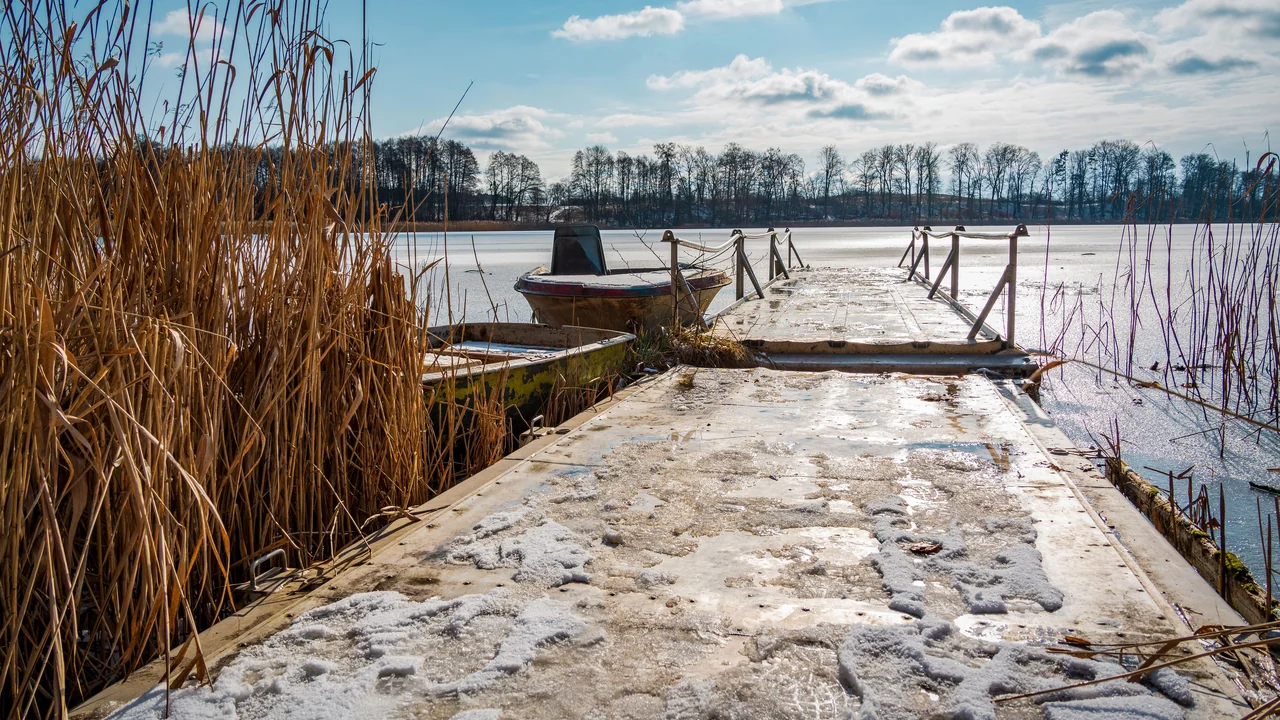
The most immediate difference between a marina slip vs private dock is how you pay. A marina slip involves an annual or monthly rental fee, while a private dock requires a large upfront investment followed by recurring maintenance costs.
Boat Slip Rental Cost
Boat slip rental costs vary dramatically by region, lake popularity, and slip size. On a premium lake like Lake Minnetonka in Minnesota, annual slip rentals range from $3,000 to $8,000 for a standard 30-foot slip. On smaller or less popular public lakes, you might find slips for $1,500 to $3,000 per year. Wet slips (where the boat remains in the water) are generally more expensive than dry stack storage. Many marinas also charge a separate seasonal launch fee or require you to purchase a membership.
Dock Ownership Costs
Building a private dock involves permit fees, engineering studies, materials, and contractor labor. A simple floating dock for a small boat might cost $10,000 to $20,000, while a larger fixed pier with a boat lift can exceed $60,000. Annual maintenance adds 2% to 5% of the build cost each year for decking replacement, hardware repair, and insurance. If you are on a river or public lake, the River Dock Permit: Navigable Waterway Rules & How to Apply (2026) or Public Lake Dock Permit: How to Get Permission to Build a Dock (2026) guide provides the specific permit costs and timelines for your location.
| Cost Category | Marina Slip (Annual) | Private Dock (Annualized over 10 years) |
|---|---|---|
| Rent / Build amortized | $1,500–$8,000 | $1,500–$6,000 |
| Maintenance | $0 (marina covers it) | $300–$3,000 |
| Insurance | Often included or minimal | $200–$600 |
| Permit renewal | N/A | $50–$500 (varies) |
| Total Annual Cost | $1,500–$8,000 | $2,050–$10,100 |
Marina vs Dock Cost Comparison: Break-Even Analysis Over 5–10 Years
To truly compare a marina slip vs private dock, you must project costs over a realistic ownership horizon. The break-even point occurs when the cumulative cost of renting a slip equals the total investment in building and maintaining a private dock.
5-Year Break-Even Scenario
Assume a $30,000 dock build cost (including permits and contractor) and annual maintenance of $1,500. Over five years, the total dock cost is $30,000 + (5 × $1,500) = $37,500. If slip rental is $4,000 per year, five years of renting costs $20,000. In this scenario, renting is significantly cheaper over five years. The dock only breaks even if slip rental exceeds $7,500 per year.
10-Year Break-Even Scenario
Extending to ten years: dock total = $30,000 + (10 × $1,500) = $45,000. Slip rental total at $4,000/year = $40,000. The dock still costs more. However, if slip rental is $5,000/year, renting costs $50,000, making the dock the cheaper option. The break-even point typically falls between year 7 and year 12, depending on local slip rates and dock build costs.
| Dock Build Cost | Annual Slip Rent | Break-Even Year |
|---|---|---|
| $20,000 | $3,000 | ~Year 8 |
| $30,000 | $4,000 | ~Year 10 |
| $40,000 | $5,000 | ~Year 11 |
| $50,000 | $6,000 | ~Year 12 |
When You Cannot Build: Permit Denials and Unsuitable Shoreline

One of the strongest arguments in favor of a marina slip vs private dock is that building a dock is not always possible. Even if you own waterfront property, you may be denied a permit due to environmental regulations, shoreline classification, or navigational conflicts.
Permit Denial Scenarios
The U.S. Army Corps of Engineers (USACE) regulates all structures below the ordinary high-water mark on navigable waters. If your proposed dock would interfere with navigation, harm critical habitat for endangered species, or violate a state’s shoreline management act, the permit will be denied. On many public lakes, a Public Lake Dock Permit: How to Get Permission to Build a Dock (2026) is required, and local authorities may impose moratoriums on new dock construction if the lake is at capacity.
Unsuitable Shoreline Conditions
Some shorelines are simply unsuitable for a dock. Steep bluffs, shallow water extending far from shore, soft muddy bottoms that cannot support pilings, or rocky substrates that make dredging impossible are common issues. On rivers, fluctuating water levels and ice scour can destroy a fixed dock within a single season. If you face these conditions, a marina slip becomes your only viable option.
Marina Contract Terms to Check Before Signing
If you choose a marina slip, the contract terms can significantly affect your experience and costs. A marina slip vs private dock comparison must include contract flexibility.
Key Contract Clauses
- Term length: Monthly, seasonal, or annual. Annual contracts often lock in a lower rate but may penalize early termination.
- Rate escalation: Does the contract cap annual increases (e.g., 5% max) or allow the marina to raise rates at will?
- Subletting: Can you sublet your slip if you are away for a month? Many marinas prohibit subletting or require approval.
- Liability and insurance: Who is responsible if your boat is damaged by another vessel or a storm? Most marinas require you to carry liability insurance naming them as an additional insured.
- Liveaboard rules: Sleeping on your boat in the slip is often restricted or requires a separate liveaboard permit.
- Utilities and amenities: Is electricity, water, and Wi-Fi included in the fee? Some marinas charge extra for pump-out services.
Liveaboard and Subletting Rules
Liveaboard rules are a major differentiator. Many marinas prohibit living aboard for more than a few nights per month to comply with local zoning and sewage regulations. If you plan to use your boat as a secondary residence, confirm the marina’s liveaboard policy in writing. Subletting rules also matter if you travel seasonally. Some marinas allow subletting only to other members, while others ban it entirely. These restrictions do not apply to a private dock, where you control access.
Resale Value Impact of a Private Dock
A private dock can significantly increase your home’s resale value, which is a critical factor in the marina slip vs private dock decision. Real estate studies on waterfront properties consistently show that a private dock adds 10% to 25% to the property’s value, depending on the market and the dock’s quality.
Dock as an Appraised Asset
Appraisers treat a private dock as an improvement, similar to a garage or deck. A well-maintained dock with a boat lift and deep-water access commands a premium. On lakes where dock permits are hard to obtain, a property with an existing, permitted dock can sell for substantially more than a vacant lot. Conversely, a dilapidated or non-permitted dock can be a liability, forcing the new owner to remove it at their own expense.
Marina Slip and Property Value
A marina slip does not directly increase your home’s value unless the slip is deeded to the property. Most marina slips are rented separately and do not transfer with a home sale. However, living near a well-regarded marina can be a selling point for boaters who prefer not to deal with dock ownership. If your home is on a water body where dock permits are routinely denied, proximity to a marina may be the only way to access the water, and that can still support a higher listing price.
Pros of Private Dock
- Adds 10–25% to home resale value
- No recurring rental fees after build
- Full control over access and use
- Can install boat lift, swim platform, or Swim Platform and Swim Raft Permit Requirements (2026 Guide)
Cons of Private Dock
- High upfront cost ($15k–$60k+)
- Permit process can take 3–12 months
- Ongoing maintenance and insurance
- May be denied due to regulations
Should I Build a Dock or Rent a Slip? Decision Framework
To answer the question “should I build a dock or rent a slip,” evaluate your situation against these criteria:
- You should rent a slip if: You plan to own the property for fewer than 10 years, your shoreline is unsuitable for a dock, permit denial is likely, or you prefer lower upfront costs.
- You should build a dock if: You plan to stay long-term (10+ years), your shoreline is suitable, you want to add resale value, and you value the convenience of stepping directly onto your boat.
- Consider a mooring buoy as a third option: For small boats on protected waters, a mooring buoy costs $500–$2,000 and avoids most permitting issues, though it offers less security than a dock or slip.
Summary: Making the Right Choice for Your Boating Lifestyle
The decision between a marina slip vs private dock ultimately comes down to your timeline, budget, and property conditions. If you are buying waterfront property, start by contacting the local permitting authority to determine whether a dock is even feasible. If the answer is yes, run the break-even numbers for your specific build cost and local slip rental rates. For most owners, a private dock becomes cost-effective after 8 to 12 years and adds significant resale value. If you are renting or plan to move within a decade, a marina slip offers flexibility without the capital commitment. For those on rivers or public lakes, review the River Dock Permit: Navigable Waterway Rules & How to Apply (2026) or Public Lake Dock Permit: How to Get Permission to Build a Dock (2026) guides before making any decisions.
Frequently Asked Questions
Is it cheaper to rent a slip or build a dock?
In the short term (under 8–10 years), renting a slip is almost always cheaper. A $30,000 dock with $1,500 annual maintenance costs $37,500 over five years, while renting a $4,000-per-year slip costs only $20,000. Over 10+ years, the dock may become cheaper if slip rental rates are high. The break-even point typically falls between year 7 and year 12. You must factor in your local slip rental costs, dock build expenses, and how long you plan to stay at the property.
How much does a marina slip cost per year?
Annual marina slip costs range from $1,500 on smaller public lakes to $8,000 or more on premium lakes like Lake Minnetonka or Lake Tahoe. The cost depends on slip size (20-foot, 30-foot, or 40-foot), amenities (electricity, water, Wi-Fi), and whether the marina offers wet slips or dry stack storage. Many marinas also charge a one-time membership fee or seasonal launch fee. Always ask about rate escalation clauses in the contract, as some marinas raise rates by 5–10% annually.
Does a private dock increase home value?
Yes, a well-maintained private dock can increase a waterfront home’s resale value by 10% to 25%. Appraisers treat a dock as a structural improvement similar to a garage or deck. On lakes where dock permits are limited, a property with an existing, permitted dock commands a significant premium. However, a non-permitted or dilapidated dock can decrease value because the new owner may face removal costs. The impact is greatest when the dock provides deep-water access and includes a boat lift.
What if I cannot get a dock permit?
If your dock permit is denied due to environmental regulations, navigational conflicts, or shoreline unsuitability, a marina slip is your best alternative. You can also consider a mooring buoy for small boats, which often requires a simpler permit from the USACE or state DNR. On some lakes, community docks or shared-use piers are available for a fee. If you are purchasing waterfront property, make the permit approval a contingency in your purchase agreement so you are not stuck with land you cannot use for boating access.
Last updated: July 02, 2026
- U.S. Army Corps of Engineers (USACE) Regulatory Program
- National Association of Realtors Waterfront Property Survey
- State and local dock permitting authority websites

Dock Permit Guide
DockPermitGuide editor covering boat dock and pier permit requirements, costs, and regulations across the United States, Canada & Australia.